
Valuable Mojave Desert Rocks and Minerals Guide
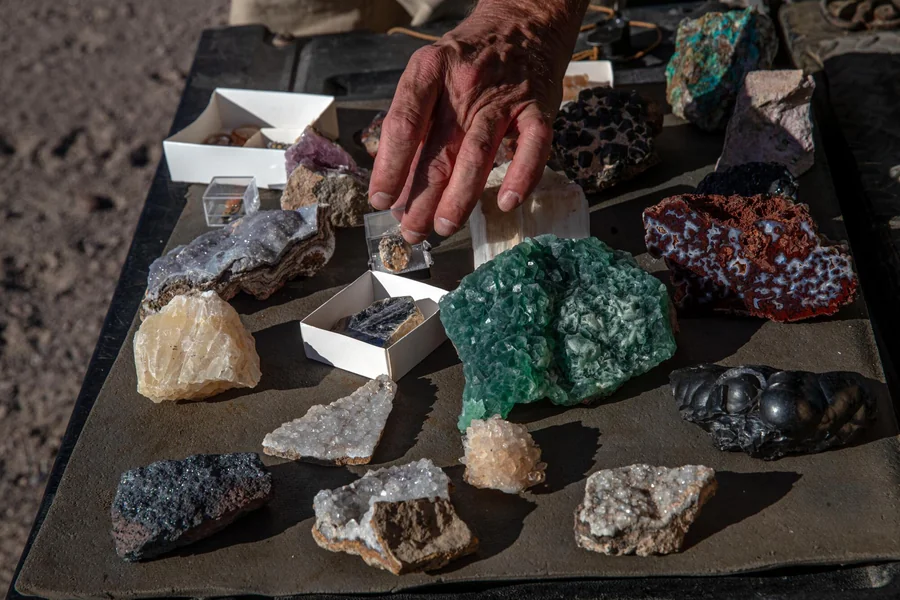
The Mojave Desert is a very intriguing geological area in North America. The rugged terrain, volcanic landscapes and old mountain ranges of it give evidence of millions of years of natural history. The desert is full of undiscovered treasures to the collectors of rocks and lovers of geology. When one discusses Valuable Mojave Desert Rocks and Minerals, there is a multitude of gemstones, crystals and rare mineral specimens that can be located anywhere around this expansive desert landscape.
The Mojave Desert is a stretch that includes some parts of California, Nevada, Utah, and Arizona and is characterized by unique geological formations that are a result of volcano eruptions, plate movements, and erosions. These natural phenomena have conditioned so that a great number of minerals were formed in the depths of the earth and later on surfaced to the surface.
Dry lakebeds, desert washes and rocky hill-sides are known to be frequented by collectors in search of interesting stones. Knowledge About Valuable Mojave Desert Rocks and Minerals can be used to understand why this area is the favorite of the rockhounds all over the world.
Geological History of the Mojave Desert
The Mojave Desert has a very complicated history of geology which greatly contributed in the formation of precious minerals. Through the volcanic eruptions, movement of tectonic plates and gradual rising of mountain ranges the area was exposed to various types of alterations over hundreds of millions of years.
These earth processes made fissures and holes in the rocky formations. These spaces were filled with mineral rich fluids which eventually deposited the crystals and ores. These deposits with time became hardened to different minerals and gemstones.
It was also significantly contributed by erosion. Rocks that surrounded this region were eroded over time by wind and water revealing mineral deposits that were previously found deep underground. The desert conditions enabled most of these minerals to stay on the surface as opposed to being covered by the soil or vegetation.
The Mojave Desert has a rich variety of minerals due to this protracted and dynamic geological past which still captures the interest of mineral collectors in modern times.
Agates and Chalcedony
Among the most popular Valuable Mojave Desert Rocks and Minerals are agates and chalcedony. These are the stones that are of the quartz family and are characterized with their colorful designs and smooth textures.
Agate is usually formed within the holes in volcanic rock. These spaces get filled with silica rich fluids which are slowly crystallized in layers as they enter them. Different mineral impurities may occur in each layer forming the beautiful banded patterns found in most agates.
Agate can also be in the form of red, orange, brown and white in the Mojave Desert. Others have complex designs, which are particularly noticeable with polishing.
Chalcedony is a very similar stone to agate except that it is not banded but tends to be uniform in color. Both are hard and commonly occur in desert gravel or even rocky outcrops.
Collector often check dry washes and volcano rock formations where the erosion process can expose such quartz based stones.
Jasper and Colorful Desert Stones
Another notable representative of Valuable Mojave Desert Rocks and Minerals is Jasper. It is a kind of microcrystalline quartz like agate only that in most cases it is more opaque.
Jasper may be in the dark red, yellow, green or brown. These colorful hues are occasioned by minor minerals like iron used in the stone.
Desert jasper may have patterns of swirls, speckles or layers of color change. Such works look like miniature landscapes when cut and polished.
Since jasper is resistant to erosion, it is able to resist erosion and is commonly found in desert washes where the flowing water used to transport rocks of the nearby hills.
The collectors like jasper since it can be polished, making use of it in either jewelry, carving or decorative stonework.
Gold and Precious Metals
Mojave desert is also having a rich history of gold mining. The nineteenth century prospectors had a journey to the region in search of precious deposits.
The formation of gold in the Mojave was usually as a result of mineral rich fluids flowing through the cracks within the underground rock formations. When the fluids cooled, gold would be crystallized in the quartz veins.
Gradually erosion split these veins and little grains of gold tended to be deposited occasionally in stream sediments. The techniques employed by the prospectors to separate gold and the sand and gravel included panning and sluicing.
Despite the fact that large scale mining has reduced in most regions, in some desert regions, one may occasionally find traces of gold.
To rock collectors, similar to finding even a small gold flake can be a refreshing memory of the history of mining in the area.
Rare Crystals and Mineral Specimens
Besides more common types of stones, the Mojave Desert houses a few of the rare mineral specimens which are sought after by serious collectors.
Borax is one mineral that is popular in the area. The mineral was formed in the ancient evaporated lakebeds whereby crystalline deposits were left by mineral rich water.
Some desert areas have also been reported to have tourmaline crystals. These crystals may be formed in various colors such as black and green, and even pink based on the chemical elements they are made of.
Calcite is one more mineral that occurs in the area occasionally. The crystals of calcite can be created in caves or in veins of the minerals and they tend to have exciting shapes and transparent forms.
These minerals are rare among agates or jasper since their occurrence needs certain conditions to be in existence, yet they are of much value to the collector.
Where Rock Collectors Search in the Mojave
When looking into Valuable Mojave Desert Rocks and Minerals, rock collectors have a tendency of turning their eyes to specific surroundings in which the minerals have a higher chance of being found.
Dry lakes are attractive sites as they are deposited on minerals and rocks after evaporation. In these regions, there are usually crystals and abnormal formations of minerals.
Another fruitful is the area of desert washes. These channels are filled with water flowing with rocks of other mountains during rare rainstorms. The water evaporation deposits its rocks along the wash.
The presence of volcanic rock formations also draws the attention of the collectors since most of the gemstones are formed in the volcanic environment. Bastalt or rhyolite rock areas can be found to have agates and other minerals based on quartz.
These places may be productive but one needs patience and keen attention in searching precious stones.
Responsible Rock Collecting
Any person who is interested in gathering minerals in the Mojave desert ought to practice responsible activities. These are numerous places of public land where a little collecting is permitted, and here there are a few preserves.
Some of the conservation zones and national parks do not allow the removal of rocks or minerals. Local regulations must be observed before gathering by the visitor.
It is also significant to protect the environment. Collector must not harm natural formation and or disturb natural habitat of wild animals.
Use of small portions of material to personal endowment is one way of making sure that these natural resources are left to be used by the future generations.
Responsible rock collecting allows enthusiasts to enjoy the beauty of desert minerals while preserving the landscape.
Final Thought
The Mojave Desert Rocks and Minerals are of great value and mirror the amazing geological story of one of the most dramatic sceneries in North America. The presence of volcanism, movement of tectonics and a lot of erosion over a period of millions of years has formed the region with abundant minerals and gemstones.
The Mojave Desert can provide endless opportunities to the collectors and geology lovers with colorful agates and jasper, rare crystals, and ancient gold deposits. Every rock in the desert has a legend of the natural powers that have influenced the area.
To any one who is willing to look diligently through rocky hills and desert gullies and old lakebeds, the Mojave is an interesting place where adventure and geology unite.
FAQs
What are some valuable Mojave Desert rocks and minerals?
Common examples include agates, jasper, chalcedony, quartz crystals, gold bearing rocks, and minerals such as borax.
Where can agates be found in the Mojave Desert?
Agates are often found in desert washes, volcanic rock areas, and gravel deposits where erosion has exposed them.
Is gold found in the Mojave Desert?
Yes the region has a long history of gold mining and small gold deposits can still occur in certain locations.
Why are Mojave Desert rocks colorful?
Many stones contain trace minerals such as iron that create red, yellow, and orange colors during formation.
Can collectors keep rocks found in the Mojave Desert?
Some public lands allow limited collecting, but protected areas such as national parks usually prohibit removing rocks.
What tools do rock collectors use in the desert?
Collectors often use rock hammers, chisels, sieves, and backpacks to safely gather and carry mineral specimens.