
How to Tell if a Rock Has a Fossil Inside – Simple Signs
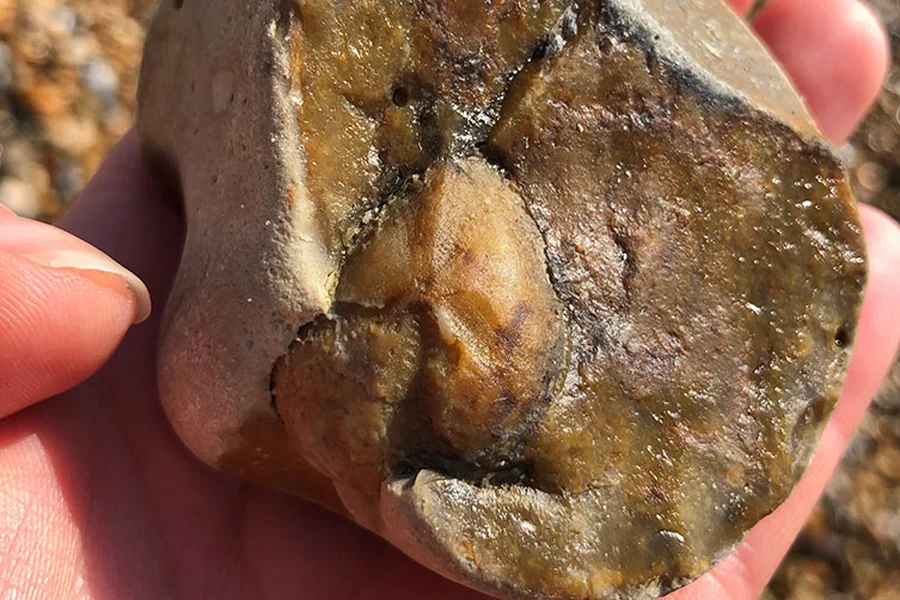
One of the most interesting natural records of life on earth is fossils. They give the idea about plants and animals that existed millions of years ago. The question such as How to Tell If a Rock Has a Fossil Inside is frequently asked by many rock collectors and nature lovers before they break it open or start to take a closer look at it. The identification of the clues to fossil bearing rocks requires observation, knowledge of rock type, and patience.
The majority of the fossils are formed in sedimentary rock, which may include limestone, shale or sandstone. These are rocks that are formed when a build up of sediments happens over an extended period and these harden into rocks. When plants or animals get covered by those sediments the remains can eventually be transformed into fossils.
The cycle Learning How to Tell if a Rock Has a Fossil Inside can assist the collector to know which specimens in the field are promising. With the help of geological hints and images, there is more conveniently making out rocks that might be lying ancient life entombed in them.
Understanding How Fossils Form
It is useful to have an idea of how fossils are formed before the discovery of fossil bearing rocks. Fossilization normally commences when an organism is covered in a sediment soon after its death. This mud preserves the remains against decay and destruction by the environment.
With time more layers of sediment cover the top thus creating pressure and making the sediments become hardened into a rock. In the process the original organic material can be slowly replaced by minerals.
In some cases the impression of the organism only is preserved, in other cases the structure itself is even preserved in stone. Fossils are possible through the proper conditions of shells, bones, leaves and even footprints.
The rocks that were deposited in the sedimentary environment, e.g., ancient oceans, lakes, or riverbeds, are the most probable to have fossils because fossilization normally happens in sedimentary environments.
This knowledge allows one to reduce the possibilities in which types of rocks should be studied in more detail.
Types of Rocks That May Contain Fossils
The first method of learning how to tell whether a rock has a fossil within involves the identification of the rock type. There is a low frequency of fossils in igneous rocks such as granite or basalt since they are composed of molten matter that destroys organic matter.
Fossils are also not likely to be found in metamorphic rocks since the heat and pressure used in the formation of the rocks tend to change or destroy the fossil structures.
The most promising ones are sedimentary rocks. Limestone is particularly known to harbor marine life fossils like shells and corals. Shale tends to preserve plant remains as well as small sea creatures.
Sandstone can also have fossils in it especially when it was formed in an environment where animals were found or moved.
These rock types can be used to make the collector concentrate his search on areas where the fossils have better chance of being found.
Visual Clues on the Surface of Rocks
Numerous fossils are brought out in the form of apparent patterns on a rock surface. The patterns can either look like shells, impression of leaves or some other peculiar form that has been cut into the rock.
Fossilized shells are usually signified by circular or spiral patterns. Such forms can be attributed to ancient sea creatures like ammonites or snails.
Fossil plants or coral structures could be in a linear or branching pattern. There are also instances where one can find certain small bone fragments or tooth shapes in the rock.
The differences in color may also be a hint. Mineral replacement may make some fossilized material darker or lighter than rock through the replacement of minerals.
Close examination of such patterns may give useful indications of whether a rock may have fossil traces.
Examining Rock Texture and Structure
Other hints in the quest to figure out how to tell whether a rock has a fossil in it can be found in the texture and structure. Layered or sedimentary textures are commonly found in fossil bearing rocks.
The fact that these layers are fronted by sediments and not molten materials suggests that the rock is a result of the accumulated sediments. Between these layers, it is more likely to find fossils that were buried by the organisms.
Small pieces of shells or bones are also visible on the surface of some rocks. The fact that these fragments were there is an indication that there may be other fossils residing within the rock.
Also, a rock that is grainy or has small particles of sediment can be a sign of sedimentary origin, which enhances the probability of the preservation of fossils.
Collector can use texture and form to determine rocks that need closer scrutiny.
Tools for Checking Fossil Bearing Rocks
Even though some fossils can be identified by the naked eye, there are tools that may assist in a closer analysis of rocks. Another tool of great importance to fossil hunters is a magnifying lens.
Magnification enables the collector to observe minor features like shell lines or plant designs that would otherwise have been obscure to the eye.
The process of splitting rocks along natural layers can be performed with the help of a rock hammer and chisel. This method occasionally brings to light some concealed fossils that were contained within the stone.
Soft brushes may be used to clean the surface without harming the delicate fossil formations by cleaning out the dirt or loose bottom sediment.
These low-tech instruments assist collectors to research rocks as well as safeguard any potential fossil specimen.
Where Fossil Bearing Rocks Are Commonly Found
Where to look is a significant aspect in the learning on How to Tell if a Rock Has a Fossil inside. There are more environments that are likely to have fossil bearing rocks.
The road cuts and cliffs tend to reveal the sedimentary rocks which might be having fossils. These sites give an overview of geological strata which are formed over extended duration.
Fossil fragments which have been transported by adjacent rocks are sometimes seen on riverbanks and dry stream beds. Fossils that were covered by erosion may be revealed.
There can also be the marine fossils of ancient oceans in the coastal regions that have limestone structures.
These sites are frequented by many fossil hunters who go to these sites to find rocks that exhibit high chances of preserving fossils.
Preserving Fossils After Finding Them
In case a rock seems to have a fossil, one should be careful when handling it to avoid destroying the specimen. Fossils may be brittle particularly when some of them are partly revealed.
It should be gently cleaned with a soft brush or little water to get off the loose dirt. The rough surface of the fossils may be ruined by harsh chemicals or sharpened tools.
In cases where the fossil is buried deep in the rock, it may need professional preparation methods in order to reveal the fossil safely.
Most of the fossils are left by the collectors as they are partially embedded in the surrounding rock as this offers natural protection.
It is necessary to properly maintain the fossils so that they can be used to study or exhibited.
Final Thought
The ability to learn How to Tell if a Rock Has a Fossil Inside is a thrilling skill that relates people to the old history of the earth. The fossils offer good records of plants and animals that existed millions of years ago, and are found in the beds of the sedimentary rocks.
By understanding how fossils form, recognizing promising rock types, and observing visual patterns on the surface, collectors can greatly improve their chances of finding fossil specimens.
It is necessary to be patient and observant. A fossil will not be found in each rock, yet the process of searching and getting to know about geological history will make fossil hunting an interesting experience.
Every fossil that has been discovered narrates us about the far away past, and it is important to remember that the rocks under our feet contain wonderful documentations of life on the planet.
FAQs
How to Tell if a Rock Has a Fossil Inside?
Look for surface patterns, shell shapes, plant impressions, or layered sedimentary structures that may indicate fossil preservation.
What types of rocks usually contain fossils?
Sedimentary rocks such as limestone, shale, and sandstone are the most likely to contain fossils.
Can fossils be found in igneous rocks?
No fossils are rarely found in igneous rocks because the heat from molten material destroys organic remains.
What tools help identify fossils in rocks?
Magnifying lenses, soft brushes, and rock hammers are commonly used to examine and split rocks carefully.
Where are fossil bearing rocks commonly found?
They are often found in sedimentary rock formations, riverbanks, cliffs, and areas that were once ancient oceans or lakes.
Should you break open rocks to look for fossils?
Sometimes rocks can be carefully split along natural layers, but delicate fossils should be handled gently to avoid damage.