
Arkansas Gemstones – Types, Locations, and Collecting Tips
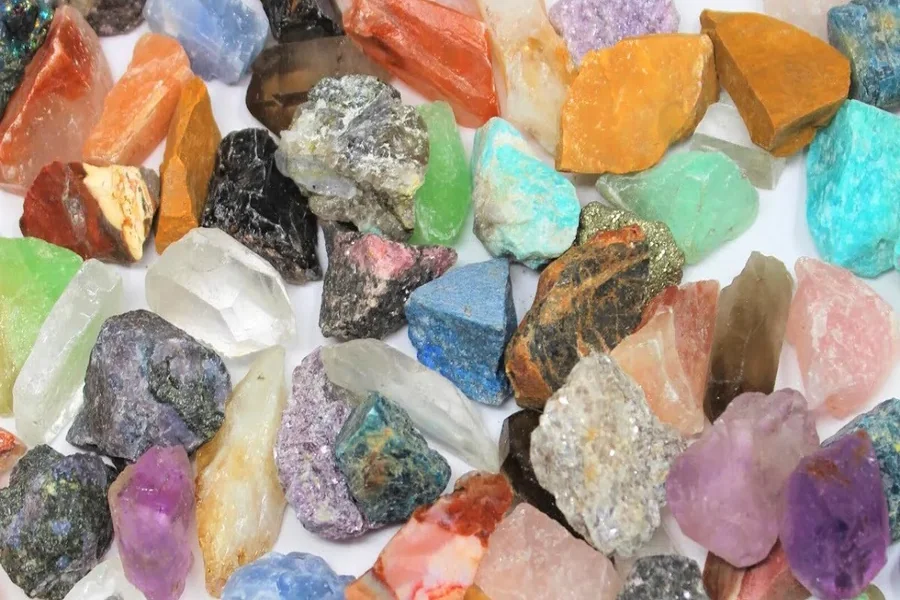
The quality, variety and accessibility of Arkansas Gemstones make them so important to the collectors, jewelers, and the geology enthusiasts. Arkansas is among the few regions in the United States that crystals such as quartz, amethyst and other gemstones are common and can be easily harvested. The knowledge of Arkansas Gemstones assists hobbyists and professionals to recognize rare stones, enjoy their geologic origin and be safe in the activities involved in their collection.
Geology of the state gives the crystal the best environment to form. The Quartz crystals, which are the most common Arkansas Gemstones, are said to be very clear and very large and they are therefore used as jewelry, decorations, and in metaphysics. Other gemstones such as amethyst, jasper and garnet add to the variety of the mineral richness in Arkansas.
Common Types of Arkansas Gemstones
The most commonly known and desired type of gemstone in the study of Arkansas Gemstones is quartz. Clear quartz or rock crystal may develop into huge, well-shaped points, which are good in the hands of collectors and jewelers.
Another gemstone that is found in Arkansas is amethyst. These quartz crystals have a high value as they are found in geodes as well as in veins and are considered as having a beautiful purple color, clearness and size. Citrine is a yellow-orange form of quartz, and is a rare find, usually desirable in jewellery.
Other significant Arkansas Gemstones are jasper and agate. Such stones usually have a great effect, with bold designs and bright colors, which are perfect to use as cabochons, carvings and decorations. Garnet is less widespread, but may be met with in some streams and in alluvium, and this variety of mineral adds to the variety of ones to be collected in the state.
Geological Formation of Arkansas Gemstones
To get a glimpse of Arkansas Gemstones it is necessary to take a look at their geological formation. Quartz and amethyst are created under silica rich conditions usually within cavities of igneous or metamorphic rocks. Within millions of years, silica is deposited onto mineral rich water beds where the crystals form the recognizable points in the quartz mines in Arkansas.
The violet colour of amethyst is due to iron and other trace minerals and heat treatment or geological conditions can sometimes result in the occurrence of citrine. The sediments of the jasper and agate are formed in this way; the waters of the volcanic rocks are mineral-bearing, and thus give bands and patterns of varying hues.
The knowledge of the formation processes is used to direct the collectors on favorable locations to find Arkansas Gemstones as well as be aware of the specifics of stones found in various areas.
Read More: How Rare is Obsidian
Locations to Find Arkansas Gemstones
Arkansas Gemstones are in the Ouachita Mountains, which is a geologically diverse area in the central and western regions of the state. Although the Crater of diamonds State Park is mainly known as a diamond area, diamond possesses areas that have quartz and other collectible stones.
Quartz mining is known to take place in hot springs and Mount Ida. Visitors can dig and gather crystals in public mining sites making Arkansas one of the top destinations of both amateur and professional collectors. Other Ouachita areas have streams, rivers, and gravel beds that may produce smaller gemstones such as jasper, agate and garnet.
The safety of the collectors is guaranteed by following the rules provided in the area and getting the required permits so that the Arkansas Gemstones may be enjoyed without harming the environment.
Uses of Arkansas Gemstones
Arkansas Gemstones can be worn in jewelry, ornamentation, metaphysics and even in schools. Quartz points of large size are used to make jewelry or are cut into pendants and rings. The amethyst and the citrine crystal are very valued due to their color and energy.
Besides jewellery, polished jasper and agate have often been employed in carvings, cabochons and ornamental items. To demonstrate the beauty of nature and the variety of the geological environment, collectors often exhibit the raw and polished stones.
Arkansas Gemstones are used to explain mineral formation, crystal growth and geological history by geologists and educators. Educational sites and mining tours are practical activities that allow students and other people interested in earth science to learn about the subject using actual gemstones.
How to Identify Authentic Arkansas Gemstones
To determine the real Arkansas Gemstones, one looks at a number of attributes. The quartz crystals are supposed to possess natural facets, clear or slightly cloudy transparency and few bubbles. Amethyst is expected to exhibit purple colors with slight variations in colors and jasper and agate are expected to exhibit distinctive patterns that cannot be replicated easily.
Other factors are weight, hardness and formation of crystals. Quartz and amethyst are hard (they are 7 on the Mohs scale) which is harder than numerous imitations. A viewer must examine the stone with the help of a magnifying glass to identify any inclusions, bubbles, or other signs of non-natural characteristics that can be the indicator of imitation stones.
Final Thought
There is an unusual number of crystals and minerals that can be found in Arkansas Gemstones, such as clear quartz, amethyst, jasper, agate, and garnet. The Ouachita Mountains and the area around Mount Ida furnish the state with geology that offers possibilities to professional and amateur collectors to find beautiful and valuable specimens.
Being knowledgeable about the types, formation, where, and how they are identified makes it possible to have the collectors have access to authentic Arkansas Gemstones in a safe and responsible way. These gems not only beautify collections and jewelry, they also reveal information on geological processes as well as natural history of the earth.
FAQs
What are the most common Arkansas Gemstones?
Quartz, amethyst, jasper, agate, garnet, and citrine are common Arkansas Gemstones.
Where can I find Arkansas Gemstones?
The Ouachita Mountains, Mount Ida, and Hot Springs are popular locations for collecting gemstones.
Are Arkansas Gemstones used in jewelry?
Yes, quartz, amethyst, citrine, jasper, and agate are commonly used in rings, necklaces, and decorative items.
Can I dig for Arkansas Gemstones myself?
Yes, many public mining sites allow visitors to dig for quartz and other gemstones safely.
What makes Arkansas Gemstones valuable?
Size, clarity, color, rarity, and unique crystal formations increase the value of Arkansas Gemstones.
Are all Arkansas gemstones natural?
Yes, but some stones may be heat-treated or polished for enhanced color and appearance.
Do Arkansas Gemstones have metaphysical properties?
Many believe quartz and amethyst promote clarity, balance, and positive energy.
Is it legal to collect Arkansas Gemstones?
Yes, on public lands and with permission on private property, following local guidelines.
Can Arkansas Gemstones be found in rivers or streams?
Yes, smaller specimens like jasper, agate, and garnet can often be found in gravel beds and streams.
Are large quartz crystals common in Arkansas?
Yes, Arkansas is famous for producing large, high-quality quartz crystals.
Do Arkansas Gemstones require cleaning after collection?
Yes, gently rinsing and brushing stones removes dirt while preserving natural features.
Can jasper and agate be polished for jewelry?
Yes, both stones are often polished into cabochons or carved into decorative items.
Are Arkansas Gemstones used for educational purposes?
Yes, schools, universities, and museums use them to teach geology and mineralogy.
Can Arkansas gemstones fade in color?
Most quartz and amethyst maintain color, but prolonged sunlight exposure may slightly affect amethyst.
What makes Arkansas Gemstones unique?
The combination of size, clarity, variety, and accessibility makes Arkansas Gemstones highly prized worldwide.