
How Rare is Obsidian: Facts About This Volcanic Glass
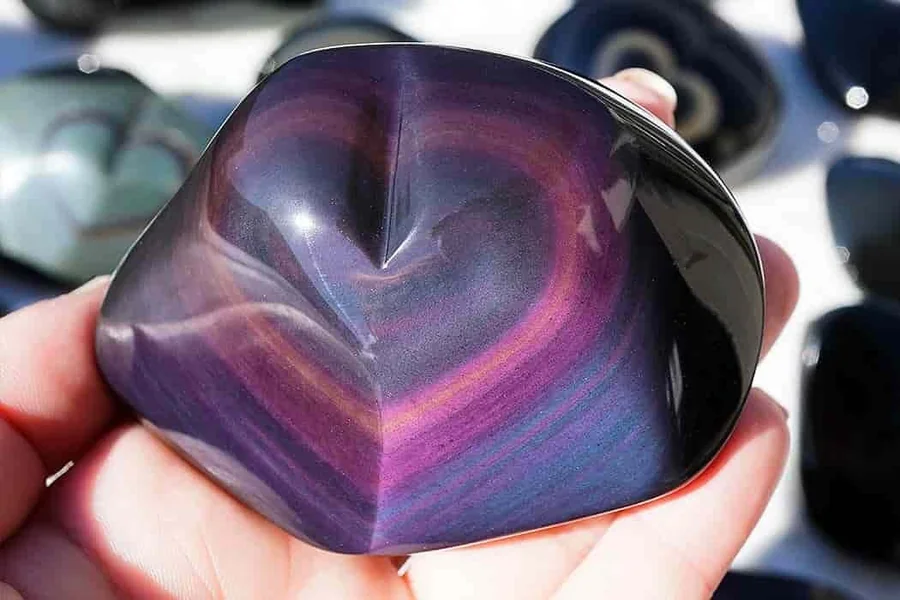
How Rare is Obsidian is a topic of frequent discussion among gemstone collectors, geology lovers, and individuals interested in volcanic stones. Obsidian is known to have a dark black coloration and a glossy appearance that enables it to be one of the most distinctive natural substances that occur on the earth. Thousands of years have been spent using it in tools, weaponry, jewelry and decorative items.
Obsidian is not regarded as being very rare in geological and in spite of its dramatic appearance. As a matter of fact it naturally occurs in volcanic areas where the lava solidifies in a fast rate. Nevertheless supply of obsidian may fluctuate across the location and type. There are those that are common and those that are less common and much sought after by the collectors.
The question of the rarity of obsidian can be answered by knowing how it is formed and where it can be found. This guide will examine the geologic process of obsidian, where it is found and why some types of this volcanic glass are more peculiar than other types.
What Is Obsidian and How Does It Form?
Obsidian is a volcanic glass that is found naturally and as the result of molten lava that cools down at a very rapid rate. Contrary to this, unlike most of the rocks that form crystalline structure during cooling, obsidian solidifies so fast that there is no time to form crystals. What emerges is a smooth as glass silica based material.
Lava when it is emitted by a volcano, as it spreads over the surface, it cools down. When the cooling is very rapid the molten material is obsidian and not the common igneous rock such as basalt or granite.
The minerals are trapped in a glassy state by this quick cooling. This structure causes obsidian to break with very sharp edges a property referred to as conchoidal fracture. In the past, this quality made obsidian very convenient in producing cutting tools and arrowheads.
Even though the most famous form of the stone is black obsidian, the stone can also be found in other colors as well. There are varieties of a brown or green or even a rainbow reflection around some of them based on the mineral composition and small inclusions that become sealed within the glass.
The creation process is not so unusual since there are numerous volcanic activities in most parts of the world. The presence of obsidian however is restricted to certain conditions of cooling thus restricting its occurrence.
How Rare is Obsidian in Nature?
In questioning how rare the obsidian is, there is a difference in the way it is interpreted in relation to what you are responding. Geologically speaking obsidian is not very rare in the world. It develops in most of the volcanic areas throughout the world whereby the lava that is composed of silicon cools down at a fast rate.
Active or historic volcanoes usually have natural deposits of obsidian. Some of the areas that are known to produce the obsidian include parts of the United States, Mexico, Iceland, Japan, Italy and Indonesia.
The stone may also be on the ground in these locations associated with volcanic scenery or lava flows. Due to this fairly broad distribution, common black obsidian is moderately abundant as opposed to rare.
But even there its occurrence remains scanty in comparison with more widespread rocks, such as granite or basalt. The obidian is not everywhere as it only forms under certain volcanic conditions. Accessibility is another determinant in its rarity. Certainly, certain obsidian deposits are remote or isolated and the gathering of obsidian may be limited by some means.
Therefore, although the obsidian as a material is not exceptionally scarce, its formation is closely due to the geological position and the volcanic past.
Read More: Dragon Vein Agate Real or Fake: How to Tell the Truth
Rare Types of Obsidian
Even though ordinary black obsidian is not rare in the volcanic areas, some of it are significantly more exotic. These special types are created after certain minerals or gas bubbles are entraped within the volcanic glass.
Rainbow obsidian is one of them. This diversity exhibits colorous streaks as light reflects on the surface at some angles. The effect of the rainbow comes about due to the light refraction of the microscopic mineral layers.
There is also the snowflake obsidian which is rare. This rock has patterns of white or gray crystals which are similar to falling snow. When the volcanic glass cools the patterns are formed by the development of the cristobalite crystals within it.
It also has fire obsidian which is one of the rare obsidians. Fire obsidian is able to display golden, green or red flashes when it has been polished well. These hues are as a result of fine layers of magnetite in the rock.
The other variation is the mahogany obsidian that has black glass streaks that appear in reddish brown. Iron-rich inclusions of the lava give the color.
Less popular than standard obsidian are these varieties which might be more difficult to locate as high quality pieces. Their rarity also tends to make them more sought after by those who collect and also love gemstones.
Historical Importance of Obsidian
Obsidian has been significant in the history of humankind since thousands of years. The stone was important to the ancient civilizations since it could be shaped in to very sharp blades.
The hunter early people had learned that obsidian splits up to edges sharper than most metal blades. This rendered it perfect in the manufacture of knives, spear points and arrowheads among other cutting points.
Most of the ancient cultures such as Maya, Aztec and the ancient Mediterranean cultures had been found by archaeologists with obsidian artifacts. These civilizations did not just use the obsidian as a tool but also as a mirror, ceremonial object, and jewelry.
Due to the scarcity of obsidian sources that were restricted to volcanic areas it formed a highly valued trade item. The ancient trade routes had a tendency to carry the obsidian long distances to places that did not produce it naturally.
The method of sourcing of obsidian is used today by the archaeologist as a method of tracing the origin of ancient tools. Studying the chemical structure of the stone they are able to identify which volcanic deposit it was a part of.
This historical quality further imparts an additional interest to obsidian other than how it was formed geologically.
Modern Uses of Obsidian
Obsidian is nowadays appreciated as an ornamental as well as artistic element. The stone is also a jewelry, which is used in necklaces, bracelets, pendants or carved gemstones.
When polished, it looks very striking due to its deep glossy surface. Due to this attractiveness many collectors value obsidian as a mineral specimen and also as a jewelry stone.
Sculptures, ornamental carvings and polished spheres are also made of obsidian. It is frequently used by artists due to its dramatic black color and reflection on its surface.
Interestingly obsidian can still be used practically in specialized areas. Other surgeons stock too adopt obsidian blades in the experimental surgical instruments due to their ability to sharpen more than the steel scalpels. Such blades have the capacity to make very sharp cuts with very little tissue damage.
These medical applications are not commonly used, but they point to the special physical characteristics of volcanic glass.
The obsidian is still popular with the collectors as it brings both geological and aesthetic appeal.
Factors That Affect the Value of Obsidian
Obsidian is a valuable tool that depends on various factors such as color, rarity, clarity and crafts. Black obsidian is a common material and it is generally cheap.
But some of them may fetch a high price because of individual appearance. Engraver-grade obsidian can be of more value, as it can exhibit dramatic optical effects, such as fire obsidian and rainbow obsidian.
Value also depends on the quality of the polish. Shiny obsidian will have depth and reflectivity bringing out the visuals of the stone.
The size and status of the specimen is another factor. Big and perfect pieces are more difficult to find since the obsidian can be easily cut or polished and should be broken.
The price can also be raised by the artistic carving or jewelry design. The objects manufactured by means of skilled work of artisans could be appreciated not only because of the stone but also because of the workmanship.
These are the reasons why certain pieces of obsidian are still cheap and some are highly sought-after collectibles.
Final Thought
The balancing between geology and perception is interesting that How Rare is Obsidian is a question that unveils. Although the obsidian mineral occurs naturally in volcanic settings and is not that rare in the whole world, its geological distribution is highly dependent on local conditions.
Ordinary black obsidian is accessible in various volcanic areas, and it is therefore not very difficult to find. Nevertheless some of its varieties including rainbow obsidian, snowflake obsidian and fire obsidian are rare and many collectors are interested in those.
In addition to its scarcity, obsidian is one of the most ancient and most aesthetic natural materials. Since the ancient times with weaponry and other rites of worship, this volcanic glass keeps keeping people all over the world fascinated.
When we know the way that obsidian is created and the locations where it is found, then we are able to appreciate the beauty of this substance as well as its role in the history of human kind.
FAQs
How rare is obsidian in nature?
Obsidian is not extremely rare globally because it forms in many volcanic regions, but it only occurs where silica-rich lava cools very quickly.
Where is obsidian commonly found?
Obsidian is commonly found in volcanic areas such as parts of the United States, Mexico, Iceland, Japan, and Indonesia.
Are some types of obsidian rare?
Yes. Varieties like fire obsidian and rainbow obsidian are much rarer than standard black obsidian.
Why was obsidian important in ancient times?
Ancient civilizations used obsidian to create sharp tools, weapons, mirrors, and ceremonial objects because it fractures into extremely sharp edges.
Is obsidian valuable today?
Most common obsidian is affordable, but rare varieties or finely crafted pieces can be more valuable to collectors and jewelry enthusiasts.