
What Do Raw Agates Look Like Before Cutting
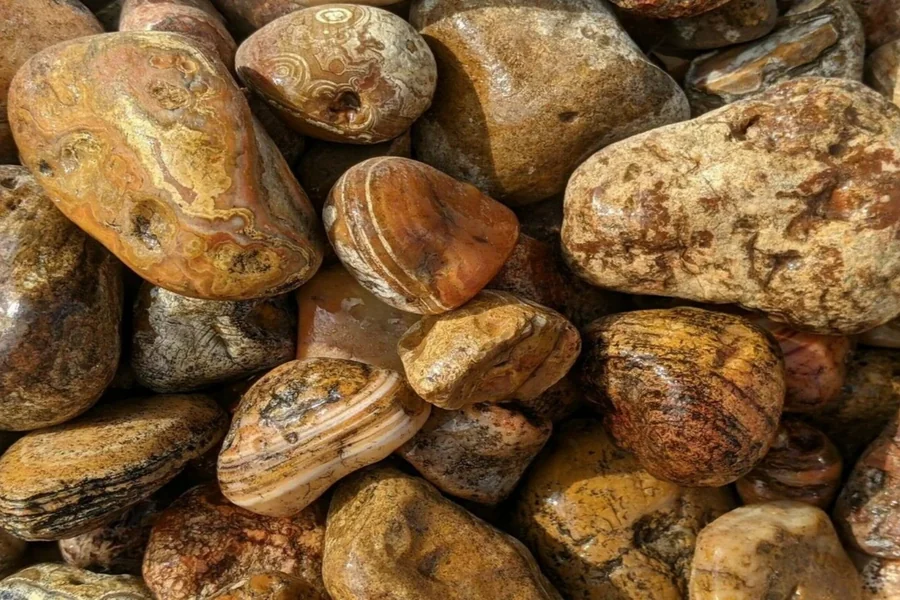
What Do Raw Agates Look Like is one of the questions that are frequently asked by rock collectors, hikers, and individuals, who like to go hunting stones in the nature. The beautiful banded patterns and vivid colors of agates are well known after polishing, and these materials appear much different when found in the raw form. Raw agates are often passed by many people without knowing what they are like especially due to their rough or plain appearance on the outward surface.
Agate is a form of chalcedony a type of microcrystalline quartz. They are developed in holes of the volcanic rocks and mineral rich fluids tend to deposit silica layers gradually. These layers over a period form the colorful bands which are visible after the stone has been cut or polished.
Agate stones in their crude form are usually dull, rough and irregular, with a rough exterior layer. This outer cover may conceal the colored designs within. Knowledge on how to identify these stones prior to cutting them is a valuable attribute of a rock collector, and hobbyists.
In this guide we shall consider the appearance of raw agates as they naturally appear, the characteristics which enable their recognition and their localities.
The Outer Surface of Raw Agates
The rough exterior of the raw agates is one of the first things that people observe. It is typical of the outer surface to be a crust or a rind that the surrounding rock had formed around where the agate grew.
This superficial layer in most cases seems gray, brown, white, or weathered with respect to the environment in which the stone was created. It does not have to be smooth but rough or slightly bumpy.
The surface in most instances is extremely mundane and it is easy to confuse the raw agates with the usual rocks. The outer rind does not normally show the colorful banding that is present within unlike in polished agates.
The process of weathering may also influence the coloring of the stone. With time as the surface is exposed to water, wind, and temperature variations, certain areas may be smoothed and some small portions of the internally patterned surface may become visible.
The waxy texture or roundness is some of the minor indicators that collectors seek in their attempt to locate raw agates.
Natural Shapes and Sizes
Raw agates do not often occur in the form of perfectly formed stones. Their typical appearance is in the form of irregular nodules or rounded masses against the volcanic rock cavities.
These nodules occur when silica rich fluids accumulate in the hollow space within the rocks and solidify slowly in layers of mineral deposits. The form of the cavity defines the end form of the agate.
Due to this agates in raw form can have extremely different sizes. There are those that can be as small as a pebble and there are those that can be very large to the extent of occupying a rock cavity.
The exterior tends to be rounded due to erosion, weathering, which causes the smoothness of the stone which flows through the rivers or layers of sediment.
Fractured edges on some of the raw agates also indicate the nodule has been broken away into pieces.
Knowledge of these natural forms aids the collectors to identify agates among other rocks.
Colors Found in Raw Agates
Raw agates might be duller in color even though the color of polished agates can be quite bright. The surface of the stone is usually disguised to conceal the brighter colors.
Nevertheless, some traces of color can still be observed on disclosed parts or damaged sides. These colors could be the color red, orange, brown, white, gray or even blue depending on the minerals.
Iron impurities usually give reddish or brown color, though other minerals can form yellow, green or bluish colour.
At times tiny transparent spots are formed at the surface at the points where the outer rind is lost.
These color hints can assist the collectors to identify a possible agate before opening it up.
Internal Patterns Hidden Inside
The most peculiar characteristic of agates is the banded interior structure. These bands are caused by the eventual deposits of silica layers that are deposited as time progresses within a cavity of the rock.
Every layer can have slightly dissimilar minerals or impurities and thus form lines of contrasting color and transparency.
These bands usually come out in the form of curves or concentric patterns which resemble waves or rings when a raw agate is cut open.
Other agates also have some rare features like moss like inclusions, crystal centers or lace like.
These patterns are concealed beneath the exterior rind until the stone has been cut or polished.
To the collector the interest in finding a raw agate is frequently in the speculation of the beautiful designs that might be contained within.
Where Raw Agates Are Commonly Found
Raw agates can be found in most regions of the globe where volcanic rocks used to be developed. It is in these environments that the cavities were present to allow agate deposits to form due to silica rich fluid.
Agate is usually found on riverbeds and gravel bars since the water erosion unleashes the stones and moves them.
Ages have also been naturally polished by waves in lakes and oceans, and consequently found on beaches.
Where glaciers have formed deposits, agates can be found in fields or gravel beds where ice transported rocks over long distances of volcanic origin.
Since the outer crust can easily be mistaken to other rocks, one has to closely observe in order to discover them.
Numerous seasoned rock hunters will use water bottles to mist stones during search. Water makes agates colorful and translucent, thus allows them to be identified easily.
Tips for Identifying Raw Agates
Raw agates are not identified at first sight, but there are a few indicators that a beginner can use to increase his chances.
It has one significant characteristic, which is texture. Rough volcanic rocks are rough whereas agates tend to be slightly waxy or smooth.
The other indicator is translucency. A small slice of the stone can be held against light to show small amounts of translucence should the rock be agate.
The rounded forms are also widespread since agate nodules frequently grow on smooth cavities.
It is also possible to look at the broken edges in search of small patterns of exposed banding or color differences in order to identify the stone.
With practice collectors learn to see these fine features even where the outside face of the agate is unadorned.
Final Thought
What Do Raw Agates Look Like is a question that would outline how these stones look like before being cut or polished. Agate in nature appears as typical rocks with rough surfaces and dull colors.
But, behind this humble surface is a wonderful internal organisation in the form of depositions of silica laid down millions of years. On being opened or polished, these stones display colourful bands and complex patterns; this has made them popular among the collectors and jewellery makers.
It is a matter of time and patience to learn how to identify raw agates and observe and then the reward comes in discovering what lies within the uncut forms.
FAQs
What do raw agates look like in nature?
Raw agates usually appear as rough nodules with a dull outer crust that hides the colorful banded patterns inside.
Are raw agates colorful on the outside?
Not usually. The outer surface often looks gray, brown, or weathered, while the bright colors appear only after cutting or polishing.
How can you tell if a rock is a raw agate?
Clues include a waxy texture, rounded shape, slight translucency, and sometimes visible banding on broken edges.
Where are raw agates commonly found?
They are often found in riverbeds, beaches, gravel deposits, and areas with volcanic rock formations.
Do all raw agates contain bands inside?
Yes. The banded structure is a defining feature of agates formed by layered silica deposits.