
Unpolished Green Rock Identification – Types and Field Guide
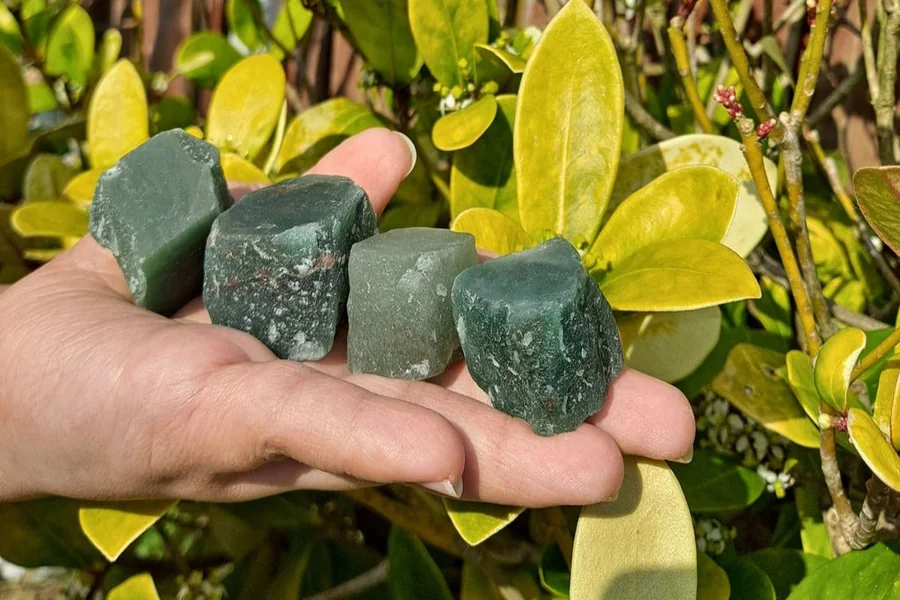
The color of green rocks and their natural texture that is usually strange makes them catch the eye of people who find them in nature. These stones are frequently met by many people when they are on hikes, beach walks or collecting minerals. Unpolished Green Rock Identification Definitions What kind of mineral or rock have you found, before it is cut or polished?
Unpolished stones tend to be rough and dull and at times coated with natural crust unlike the polished gemstones which exhibit smooth surfaces and bright shine. Their color can be in the shade of pale mint-green up to deep forest color, depending on the minerals in them.
Green color of rocks is usually induced by elements like iron, chromium or nickel. These are reacting with the crystal structure of the minerals and form green tones in the formation process. Since these elements can be found in a wide variety of different minerals, a variety of different types of rocks may occur in their unprocessed form and have a green color.
Through analysis of their features like texture, hardness, crystal structure and geology around them, it is easier to recognize unpolished green rocks and their ultimate origin.
Why Some Rocks Appear Green
The green color in rocks is normally caused by certain minerals or trace elements which are forced to be present in the rock during its formation. These factors determine the reflection of light on the surface of the mineral.
One of the most popular elements that cause green coloration is Iron. Olivine and some varieties of chlorite are some minerals that have iron in them that forms the green tones. Chromium is yet another substance, which produces green color in minerals such as emerald in vivid green colors.
Some stones can also be produced in green by nickel and copper. Whenever these elements combine with silica or other minerals when subjected to heat and pressure, the crystals which form are usually green.
The other issue that influences color is the environment that the rock is formed in. Green minerals can be found in volcanic rocks, metamorphic rock and sedimentary formation depending on the conditions under which they were formed.
These are the natural processes that can make green rocks be present in a vast variety of geological environments.
Common Types of Unpolished Green Rocks
Commonly, there are a number of various stones that are green in their rough natural form. There are those that are precious gem stones and those that are general minerals.
Serpentine
One of the commonest green rocks is serpentine. It often comes in the green color that has a tint between light green and a dark olive. It is occasionally waxy or somewhat smooth to touch before polishing. The serpentine is formed due to metamorphic activities or when some rocks melt under heat and pressure.
Jade
Jade is a well-known green jewel which can be unattractive and coarse, and thus it has to be polished. There are two, nephrite and jadeite. Jade in the state of nature might resemble an ordinary rock with slight green color until it is cut and polished.
Olivine
Olivine is a mineral that is formed in volcanic conditions. It can be bright green or yellowish green when occurring in forms of crystals. Olivine is a gem quality type peridot.
Green Quartz
In some cases, the quartz is green as a result of mineral inclusions. It can appear in an opaque or slightly transparent state in its crude form. After cutting or polishing, the green color is very conspicuous.
Malachite
Malachite is a copper mineral that has deep green color and patterned bands. As it exists in nature it tends to be coarse clumps or scaly shapes.
These illustrations demonstrate how various minerals may resemble when they are not polished despite the fact that they are produced in various geological activities.
How to Identify Green Rocks in the Field
To determine the green stones, one needs to observe a number of characteristics closely. A large number of rocks can be identified through their physical characteristics even without laboratory equipment.
The initial one is the analysis of texture. There are those stones that are smooth or waxy and there are those that are rough and grainy. Serpentine is also smooth in many occasions compared to the minerals on quartz basis.
Another important factor is hardness. Quartz is mainly hard and not easy to scratch whereas such minerals as malachite are soft and fragile.
The distribution of colors can also be a good tip. There are those that have a uniform green color and those that bear patterns, bands and spots.
Crystal shape can be used as well in identification. Some minerals are known to take up identifiable crystal arrangement like hexagonal quartz crystals or cube in other minerals.
It is also good to see the place of discovery of the rock. Minerals such as olivine and jade or serpentine may be found in rocks that were found in places close to volcanic activities and in metamorphic areas respectively.
With a combination of these observations, it is easy to make a determination regarding the potential identity of an unpolished green stone.
Where Green Rocks Are Commonly Found
Green minerals can be found in numerous geological settings in the world. Whether it is a mineral or not and the conditions surrounding the mineral formation, their location is seen to be more of an issue.
Serpentine formations are usually located in the areas of metamorphic rocks where the oceanic crust formations have been subjected to transformation in the deep underground areas. These regions usually form extensive green rock.
Olivine crystals are usually found in the volcanic rocks like basalt. These are common in the regions that once underwent volcanic eruptions.
Jade beds are quite limited and they are normally related to certain metamorphic settings. There are countries like Myanmar, Guatemala and some regions of New Zealand that are famous as jade deposits.
Malachite is a resultant formation in copper rich deposits and it is common in copper mines. Rich green mineral structures may occur in these areas.
The geological processes vary in every location; hence, each area has the potential of giving a different type of green stones.
Uses of Green Stones
Green rocks are used in various ways in the contemporary society. Others are precious gemstones and others are used either ornamentally or industrially.
Jade is an item that has been overvalued in most cultures over a span of thousands of years. It is usually cut into jewelry, ornaments and sculptures. It is also durable and thus can be used in complex designs.
Quartz and olivine can also be utilized in jewelry when they become of gem quality. Once cut and polished the stones may show beautiful clarity and color.
Malachite is extensively utilized in decorative items in form of carved bowls, beads and show specimens. It is aesthetically impressive because of banded patterns.
Moreover, certain building materials and decorative landscaping stones have been made of some green stones because of the natural color.
The multiple applications indicate how the raw geological materials can be transported into useful or artistic products.
Final Thought
The natural stones that are green might be intriguing to study and this more so when they are in their crude and uncut form. The Unpolished Green Rock Identification is something that will allow people who are collectors and nature lovers to understand more about the minerals they can come across in the outdoors.
It is possible to identify most of the green rocks by observing their colors, hardness, texture and geological place. Due to minerals such as serpentine, jade, malachite, quartz and olivine, they possess distinct features that make them different.
The investigation of these stones can also show the outstanding geological events that mold the Earth under our feet. Volcanic activity to metamorphic transformation, there is a lot of natural forces that lead to the formation of green minerals.
Being a rock collector or just interested in the rocks they discover when going out on the open land, the knowledge on how to single out unpolished green rocks is the gateway to a new understanding of the natural world.
FAQs
What causes rocks to be green?
Green color in rocks usually comes from minerals containing elements such as iron, chromium, nickel, or copper.
What is the most common unpolished green rock?
Serpentine is one of the most commonly found green rocks in its raw form.
Can jade look dull before polishing?
Yes. Raw jade often appears rough and dull until it is cut and polished.
Where are green rocks usually found?
Green rocks can appear in volcanic areas, metamorphic rock regions, and copper rich mineral deposits.
How can you tell if a green rock is valuable?
Value often depends on mineral type, color quality, rarity, and whether the stone is suitable for cutting into gemstones.
Is it safe to collect rocks from nature?
Rock collecting is generally safe, but it is important to follow local regulations and avoid protected areas.