
Opalized Crab Claw Fossil – Formation Value and Meaning
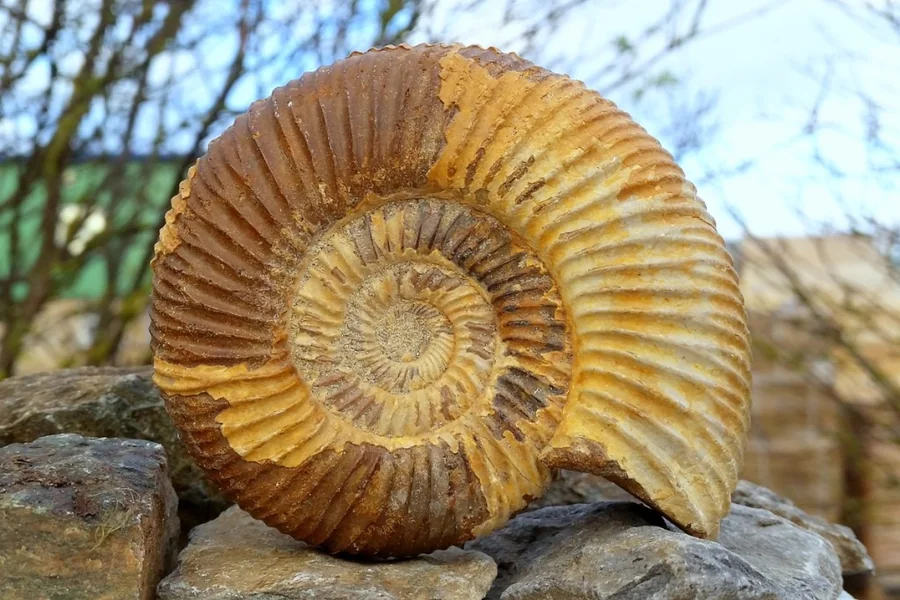
Fossils enable us to peep into the far past and see the life that existed several millions of years back. The Opalized Crab Claw is one of the most visually attractive fossils which scientists and collectors found among the possible number of fascinating fossils. This is a special fossil which is formed by the gradual conversion of a crab claw into opal by natural geological mechanisms. What comes out is an exceptional specimen that is a blend of paleontology and beauty of gemstones.
People are surprised to learn about an Opalized Crab Claw at first because of the fact that such transformation is possible. In very long durations, fossils can change the organic material into minerals. In uncommon circumstances, the spaces between the fossil are filled by silica rich water and gradually solidified into opal. The process is able to keep the crab claw in its structure and even make it look like a colored gemstone.
Researchers and even the collectors appreciate these fossils because of their beauty as well as the scientific information they impart. They provide information about the ancient marine environment and the conditions that enabled such massive mineralization to take place.
What Is an Opalized Crab Claw
An Opalized Crab Claw is a fossilized crab claw which has been substituted with opal due to the influence of several millions of years. In the process of fossilization, an original organic substance of the claw is slowly dissolved, and is substituted by the silica minerals which later come to compose opal.
This is done without altering the shape and structure of the claw and gives it a gemstone-like look. Others are faintly colorful and others exhibit the well known play of color which is characteristic of precious opal.
The fossil usually preserves fine details in form of ridges, edges, and textures. The information can be used by scientists to examine old species of crabs and it is also visually attractive to the fossil hunters.
Oppositely to a wide variety of fossils being mineralized with the help of calcite or other minerals, opal replacement is quite uncommon. This scarcity adds to the particular interest of an Opalized Crab Claw in a fossil collection and in a mineral exhibition.
How the Fossilization Process Creates Opal
The opalization of a fossil is a complicated geological process which takes place under certain conditions. It starts when the carcass of a crab gets covered with sediment after the death of the animal.
After some time, the deposits become covered with layers of sediment. These layers take care of the claw not disintegrating speedily and provide the environment in which fossilization can occur.
Silica-containing groundwater travels gradually through the adjacent layers of rock. This water transports dissolved particles of silica which fill slowly the little cracks of the fossil.
The silica solidifies and makes opal as the water evaporates or undergoes a chemical transformation. In this replacement process the original material of the claw is gradually being replaced without altering the shape in the process.
The process can take millions of years. When it is finished a fossil remains resembling a gemstone sculpture of the original claw of a crab.
Locations Where Opalized Crab Claws Are Found
Certain parts of the world tend to be renowned in the generation of fossils that are opalized. Australia is the most recognizable of them.
Wealthy Australian opal fields, particularly of western regions like Lightning Ridge, Coober Pedy and White Cliffs, have yielded extraordinary opalized fossils of shells, bones and claws of crabs. These areas were ancient inland sea where life at sea flourished a million years ago.
Sediments with silica were left when the seas died away. These conditions enabled the marine creatures to go through the opalization process, which was fossilized.
The Australian deposits are the most renowned and fruitful even though there are a few other locations in the world that sometimes form opalized fossils.
These fossils are not uniformly distributed since they are observable to be associated with particular geological settings. This scarcity is a contributing factor to their scarcity and worth.
Scientific Importance of Opalized Fossils
Although the beauty of an Opalized Crab Claw is worth the admiration of the collector, the fossil is also of scientific interest. Paleontologists analyze these specimens in order to get to know more about ancient marine life.
The retained form of the claw gives information on the species of crab that inhabited the prehistoric oceans. By studying the structure, researchers can compare the modern crabs with it and understand how they are related in evolution.
The geological conditions of the time of their formation can also be learnt by these fossils. Silica rich groundwater and certain environmental conditions of fossilization are represented by the availability of opal.
The examination of these fossils helps scientists to reproduce ancient settings and has a better idea of how the Earth landscapes and oceans evolved with time.
By so doing, opalized fossils can be used both scientifically and educationally.
Why Collectors Value Opalized Crab Claws
The Opalized Crab Claw is a popular gemstone piece that incorporates natural history and gemstone allure in the eyes of collectors all over the world. Rarely are so dramatic structural changes between organic and mineralized gemstone observed in fossils.
Each specimen is unique. The form, size and colour schemes are different with the original claw and the circumstances of its fossilization. The flashes of color on some claws are brilliant and the color of others is soft opalescent.
The formation process is very rare making such fossils very valuable to the collector market. Well preserved ones can be sought by museums, mineral collectors and fossil enthusiasts.
Small opalised fossils are occasionally used as jewellery designers. Nevertheless, many collectors would preserve them in their natural state as exhibition specimens.
They are very rare and beautiful and that is why they are highly demanded both in the fossil and the gemstone circles.
Caring for Opalized Fossils
Similar to most opals, opalyzed fossils need to be handled carefully in order to maintain their appearance. They are mineralized but delicate nonetheless.
The cracks can be experienced when the temperature in the opal is changed drastically. This explains why these fossils are usually kept in the stable conditions of the indoor world by collectors.
It should be gently cleaned with soft cloth. Chemicals that are harsh or abrasive to touch could not be used since they will leave scars on the surface.
Accidental scratches or impacts are also avoided through proper storage. Most of the collectors place their specimens in preserving display cases.
These fossils have a potential to stay beautiful through the generations and still share their story which is thousands of years old, with a careful treatment and handling.
Final Thought
One of the most outstanding examples that show the power of nature to change organic life into mineral beauty is the Opalized Crab Claw. These fossils are created out of an extended period of millions of years of geological transformation and maintain the form of ancient marine life but show the colorful characteristics of opal.
Their rarity, scientific importance and beauty make them coveted among the collectors and even scientists. Every specimen provides an insight into the ancient oceans and the complicated mechanisms which form the Earth.
Oral agate and other opalized fossils offer a study of an intriguing science-art convergence to any interested in fossil materials, gemstones, or natural history. They are a reminder that the natural world has a tendency of producing things that are much more wonderful than what we can ever imagine.
FAQs
What is an Opalized Crab Claw?
An Opalized Crab Claw is a fossilized crab claw that has been replaced by opal through natural geological processes over millions of years.
Where are opalized crab claws usually found?
Most opalized crab claws are found in Australian opal mining regions such as Lightning Ridge Coober Pedy and White Cliffs.
How does a crab claw become opalized?
Silica rich groundwater gradually replaces the original organic material of the claw and forms opal while preserving the fossil’s shape.
Are opalized crab claws rare?
Yes, they are considered rare because the conditions required for opalization occur only in limited geological environments.
Can opalized fossils be used in jewelry?
Yes, smaller specimens are sometimes used in jewelry although many collectors prefer to keep them as display fossils.
How should an opalized crab claw be cleaned?
It should be cleaned gently with a soft cloth and kept away from harsh chemicals or extreme temperature changes.