
Malachite vs Moldavite – Differences, Value, and Uses
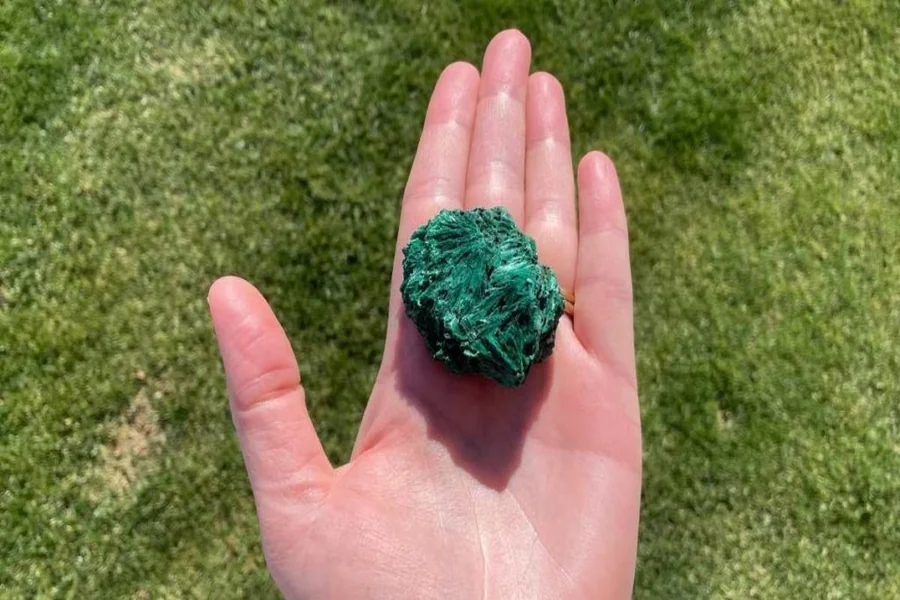
A comparison that is frequently discussed among the gems and crystal lovers is Malachite vs Moldavite. Sightseeing the differences between the two stones, which are highly appreciated, it is worth noting that they are extremely dissimilar in their origin, composition, and rarity. Malachite being a copper based mineral is formed deep in the earth, and Moldavite being a rare natural glass that was formed by a meteorite over millions of years ago.
These two stones are very different in appearance as well. Malachite is described as giving vibrant green color and banded patterns whereas moldavite normally comes as a translucent green glass, which is irregular in shape and texture. Due to these variations they are attractive to various types of collectors and jewelry designers.
Having knowledge about how these stones are formed and what they make them unique will make buyers appreciate the uniqueness of the stones. This guide will explore their geological formation, appearance, durability and the market worth in an attempt to appreciate their comparative attributes.
What Is Malachite?
Malachite is a mineral of copper carbonate that is known to be very rich in green color and is also characterised by its banded patterns. The stone is created in locations whereby the copper deposits are left vulnerable to the weathering process and chemical reactions close to the surface of the earth.
Malachite is formed when copper minerals are exposed to carbon dioxide and water in a layer fashion. These layers form swirling light and dark green motives that over time make the stone be the way it is known to be today.
Thousands of years of decorative stone and pigment use Malachite has been used as a decorative stone and a pigment. Malachite was shaped by ancient civilizations like Egyptians into ornaments, jewelry, and amulets.
The stone is usually botryoidal and has the shape of rounded clusters. With these formations cut and polished we can see the well-known green bands of which the collectors are so fond.
The malachite is relatively soft as compared to most of the gemstones, but its over-the-top color arrangements guarantee its use in jewelry and ornamental carvings.
What Is Moldavite?
Moldavite is a natural glass which is very rare and settled during a meteorite impact that took place approximately 15 million years ago. This collision occurred in (currently Czech Republic) and created intense heat and pressure to the extent of melting adjacent rocks.
When the molten material hardened, it formed green glass referred to as moldavite. Moldavite was formed instantly during the impact event, unlike normal minerals, which need time to form through crystallization.
This background causes moldavite to belong to a category of natural glasses referred to as tektites. These materials are formed as the molten materials are forced into the atmosphere as a result of meteorite hits and cooled down after falling to the earth.
Moldavite is normally presented in the form of olive green or bottle green glasses which have irregular surfaces and natural textures formed during the formation.
Moldavite is also very rare in comparison to other types of gems because it is created by a single geologic event and found in only a small area.
Malachite vs Moldavite: Visual Differences
The appearance is one of the most apparent differences in the comparison of Malachite and Moldavite. Malachite has thick bands of green which etch swirling or circular lines on the surface of the stone.
These patterns are present since the mineral develops in the layered patterns. Layers bring out a great contrast in the state of the stone which is lighter or darker green, when the stone is polished.
Moldavite has a different appearance. It is not banded, but seems to be a glossy glass of green, with natural furrows and forms. Numerous works appear crude or carved by nature.
Although malachite can be given a smooth polished finish in jewelry, moldavite can also be left in its raw form to emphasize the distinct texture.
These visual differences enable one to make a relatively easy distinction between the two stones.
Geological Origins and Formation
Another key difference is demonstrated by their inception of these stones. Malachite is a product of slow geological processes of copper deposits, and chemical reactions in the crust of the earth.
There is a long term reaction between water and carbon dioxide and the copper minerals to form malachite crystals. These crystals eventually develop and form strata.
Moldavite on the other hand, was as a result of a dramatic cosmic event. The hit of a meteorite produced such strong temperatures that the rocks melted immediately around them.
The molten material was thrown into the atmosphere and it cooled down very quickly before falling back on the ground. This fast cooling did not allow the formation of crystals which formed natural glass.
Due to its alien association, moldavite can be a favorite of space related minerals collectors.
Rarity and Market Value
The other notable distinction between these stones is rarity. Malachite is widely found in most of the copper mines across the globe such as Africa, Russia and even in some parts of North America.
Even though specimens with beautiful banding despite being of high quality may be valuable, malachite is not believed to be extremely rare.
Moldavite is much less in supply. It occurs mainly in Czech Republic and the neighboring areas where the old meteorite hit.
The deposits are limited and since collectors have been growing, the prices of mouldavites have gone high within recent years.
Good transparency and natural texture Moldavite pieces of high quality can be rather valuable.
Compared to that, malachite is cheaper and more widespread.
Uses in Jewelry and Collecting
The stones are employed both in jewelry; however, the ways of application vary a little as they have different physical properties.
Malachite is also not very hard with a hardness value of about 3.5 to 4 in the Mohs scale. Due to this malleability it is typically cut into cabochons or beads instead of being cut into faceted gems.
The patterns are swirling, which is why it is great to be used in pendants, bracelets, and decorative carvings.
Moldavite is more like glass and harder. Others cut it into faceted gemstones and others would want it to be in its natural forms.
Raw moldavites are usually desired by collectors as they are in their natural forms in the form of textures formed by the impact of the meteorites.
The two stones are both desirable to collectors, and one might ire moldavite to those who are interested in unusual geological phenomena.
Final Thought
Malachite vs Moldavite points to two interesting rocks that are very dissimilar in their origin and looks. Malachite is a product of natural chemical reactions in copper rich areas, which produces bright green stripes that have captured the adoration of many centuries.
Moldavite, however, was created when a meteorite hit and this is one of the few gemstones that have a direct relation to the events in the cosmos.
Whereas, malachite is common and is commonly used in the ornamental beauty sector, moldavite is scarcely seen and sought after by collectors due to its unusual origin.
The two stones possess distinctive attributes that are unique to them in the world of minerals and gemstones.
FAQs
What is the main difference between malachite and moldavite?
Malachite is a copper based mineral formed through geological processes, while moldavite is natural glass created by a meteorite impact.
Is moldavite rarer than malachite?
Yes. Moldavite is significantly rarer because it formed from a single meteorite impact event and occurs mainly in the Czech Republic.
How can you tell malachite and moldavite apart?
Malachite shows swirling green band patterns, while moldavite appears as translucent green glass with rough natural textures.
Is malachite used in jewelry?
Yes. Malachite is commonly polished into cabochons, beads, and decorative jewelry pieces.
Can moldavite be faceted like a gemstone?
Yes. Some moldavite pieces are faceted for jewelry, although many collectors prefer natural raw specimens.