
Rose Rock Formation Meaning and Where It Is Found
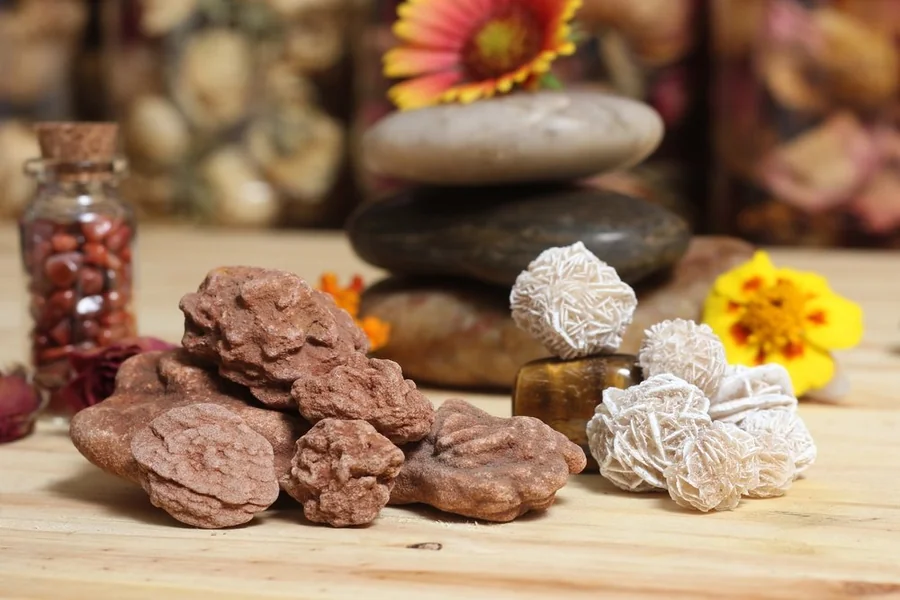
Among the most peculiar and visual phenomena as far as nature is concerned are Rose Rock. It may seem to be a hand-carved stone flower, but actually it is the natural geological formation formed by the crystals of minerals and conditions of deserts. Due to its unique outlook, Rose Rock has been the focus of many years of attention of collectors, geologists, and mineral enthusiasts.
They are interesting stones and occur by growing in clumps which resemble the petals of a rose in blossom. The formation normally occurs in the arid desert areas where minerals like barite or gypsum mix with sand particles. These minerals end up growing outwards over time in the thin blade like structures that form the rosette shapes that they are so well known by.
The appreciation of Rose Rock entails the knowledge of how it was formed geologically, its location and how it has become a favorite specimen among the mineral collectors. It may seem that it is very fragile; nevertheless, this formation is the result of years of natural growth of minerals under the influence of nature.
What Is a Rose Rock
Rose Rock is a natural mineral structure that is said to have a flower like structure. The structure is produced by the fact that the crystals are grown in circular masses of crystals resembling the flower petals of a rose.
The majority of rose rocks are made of grains of barites combined with sand grains. Barite is a mineral that consists of barium sulfate and it is common in sedimentary conditions. When the crystals develop, they accumulate sand grains in between them which makes the stone look sandy in color and in grains.
This formation is also referred to as barite rose or desert rose of different mineral composition and location. In most instances the crystals are shaped like flat plates which extend away on the center of the stone.
The dimensions of a rose rock may be very diverse. There are those that are only several centimeters in diameter and others which may reach a size that they can be conveniently held in both hands.
These stones are commonly used as decorative mineral specimens due to their beauty in nature and the unique form they have.
How Rose Rock Forms in Nature
The creation of the Rose Rock needs certain conditions of geology and environment. The stones are typically developed in arid or semi arid areas where mineral rich ground water combines with the sandy sediments.
It starts with the movement of ground water with dissolved minerals through the sand strata. In dry climates, minerals start to crystallize as the water evaporates.
The minerals are not developed as simple crystal forms, but are projected outwards in thin flat blades. The blades intersect and overlap each other as they keep on growing.
The sand grains are trapped inside the crystals and are useful in shaping the rosette pattern which is like a flower petals. With time these crystals grow into clumps and thus the rose like look.
It is a gradual process that can take hundreds or even thousands of years before a complete rose rock is formed.
Locations Where Rose Rock Is Found
Even though the rose rocks can be found in various regions of the world, there are certain places which are particularly known in the production of the peculiar mineral formations.
Oklahoma in the United States is one of the most famous destinations. As a matter of fact the rose rock has been declared as the official state rock of Oklahoma due to its concentration in some regions.
The large deposits are located in the central areas of the state in which the barite crystals grew in the layers of sandstone in ancient geological conditions.
There are also rose rocks in desert areas in Middle East, North Africa, and some parts of south western United States. In part of these areas the depositions consist of gypsum and not barite.
These deserts have arid climate which makes the dry water in the minerals evaporate and form crystals.
Due to these reasons people can find rose rock specimen in sandy desert landscapes and on the layers of sedimentary rock that are exposed.
Physical Characteristics of Rose Rock
There are a number of characteristics that render rose rock easily distinguishable among other mineral formations. The most apparent one is the structure of rosettes which looks like the petals of a rose.
The stone is usually of a reddish brown to sandy tan. This color is as a result of the grains of sand that are included in the crystals of barite.
Its surface is also rough in nature, it may be slightly rough due to sand grains stuck in the layers of crystals.
The density of the barite mineral also causes rose rocks to be rather heavy in their size.
The crystals are typically robust enough to stand even when the crystals are carefully handled even though the structure appears delicate.
Specimens are distinctive in each instance, and combining various design and arrangement of crystal blades.
Cultural and Symbolic Meaning
In addition to their geological importance, rose rocks have acquired some symbolism in some cultures and traditions.
The rose rocks are also thought to be a part of the natural inheritance of Oklahoma. The large numbers of them naturally found in the area make them seem to many inhabitants to be a special treasure associated with the history of the area.
According to some folklore, rose rocks are formed as a result of the tears of the members of the ancient tribe that were lamenting the lost warriors. It is stated in the legend that the tears dropped to the ground and transformed into rose shaped stones.
Although these are not the scientific explanations, they represent the cultural meaning the stones have acquired throughout the period of time.
People tend to use today rise rocks as a gift or decoration due to their peculiar beauty.
Collecting and Preserving Rose Rock
A search by collectors after rose rocks usually takes them to places that have a history of sedimentary structures that might have barite crystals. On certain land in places such as Oklahoma, there is limited rock collecting in the public lands.
When gathering specimens, one should be careful with handling them since the thin crystal blades at times can be broken when they fall or hit.
The cleaning of a rose rock is generally done by sweeping away the sand or dirt. The use of water needs to be limited given that too much water can destroy some mineral structures.
To keep their specimens in a good condition, many collectors keep them in display cases or padded containers.
By maintaining such stones, collectors are able to enjoy their natural beauty and pass the same to people with interest in geology.
Final Thought
The Rose Rock is simply an outstanding example of how natural mineral processes may make forms that are reminiscent of living things. The initial look at the picture depicting a stone flower reveals that it is merely a product of gradual crystal formation influenced by sand, minerals, and desert factors.
These structures make us remember that the beauty of an object of surprising beauty can be formed by geological processes. Every rose rock has a narrative concerning the old world where crystals of these minerals took long durations to form.
Rose rocks are not only strange stones to the collectors and geology lovers. They are works of art created by nature and made by the earth itself and bring together science, history and beauty in one mineral specimen.
FAQs
What is a Rose Rock?
A Rose Rock is a mineral formation made of barite or gypsum crystals arranged in a rosette pattern that resembles the petals of a rose.
Where are rose rocks commonly found?
They are commonly found in Oklahoma and other dry regions where mineral rich groundwater interacts with sandy sediments.
Why do rose rocks look like flowers?
The crystal blades grow outward in layered clusters which creates shapes similar to the petals of a rose.
Are rose rocks rare?
They are uncommon but can be abundant in certain regions such as parts of Oklahoma where geological conditions favor their formation.
What mineral forms most rose rocks?
Most rose rocks are formed from barite crystals mixed with sand grains.
How should a rose rock be cleaned?
They should be cleaned gently with a soft brush to remove loose dirt while avoiding excessive moisture or rough handling.