
Jelly Opal – Meaning, Formation, and Unique Features
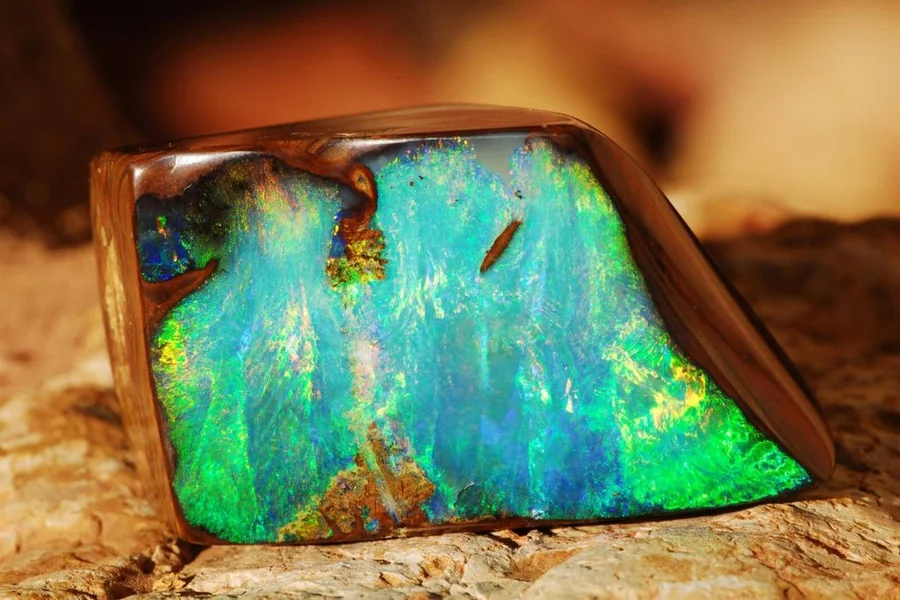
Jelly Opal is one of the most visually intriguing varieties of opal found in nature. This type of opal has no flakes of color, unlike the traditional opals, which have bright flash colors, thus making look smooth and translucent, similar to soft jelly or gel. Because of this distinctive look, Jelly Opal has attracted attention from gemstone collectors, jewelers, and mineral enthusiasts around the world.
The special texture and appearance of the stone distinguish it with other opal and help to identify it. It has a habit of being clear, milkish or having faint hues of soft colors on its body. In others there can be faint internal flashings of color under certain light conditions, although the most valued ones are those most valued because they are of a glasslike transparency.
Understanding Jelly Opal involves learning about its formation, where it occurs in nature, and how it differs from other types of opal. It has numerous similarities with typical opal, but due to its dainty visual properties and rarity, it is a fascinating source of material to jewelry designers and collections as well.
What Is Jelly Opal
Jelly Opal is a translucent variety of opal characterized by its smooth and jellylike appearance. This stone is usually clear or light-colored having a gentle internal glow.
Unlike precious opal, which displays vibrant flashes of color known as play of color, Jelly Opal often shows a more subtle visual effect. Its beauty is associated with its transparency and passing of light through the stone.
It can also be faintly colored in some specimens with a particular viewpoint, but what is of primary interest is the smooth and glassy appearance of the gemstone.
The name “jelly opal” comes from its resemblance to soft gelatin or jelly. The stone becomes almost liquid-like when polished which adds a visual depth to it.
This gemstone has a peculiar shape and thus is commonly cut in cabochon where the inherent translucent is highlighted.
How Jelly Opal Forms
The formation of Jelly Opal begins with silica rich water moving through cracks and cavities within rock layers. When this water evaporates, it deposits small droplets of silica which gradually accumulate into deposits of opals.
These silica microscopic particles in turn form structures that influence the light traveling through the stone. The structure in precious opal forms the color play of light observed in the majority of gemstones.
In Jelly Opal, however, the silica spheres may be arranged differently or lack the regular structure required to produce strong color flashes. This causes it to look more transparent or milk-like as opposed to bright rainbow colors.
These deposits of silica are hardened over thousands or even millions of years to form opal in hard form.
The end product is a stone of shining texture and unique jelly-like look that makes it unique compared to other types of opal.
Locations Where Jelly Opal Is Found
Jelly Opal can be found in several regions around the world, although it is less common than other types of opal.
Ethiopia is one of the most renowned sources where volcanic rock formations have been found to contain huge deposits of opal. Ethiopian opals often display high transparency and may resemble jelly opals in appearance.
There is another area where translucent opal is produced, Mexico. Mexican opals may also be warm in color, i.e. orange or honey colored.
Australia, famous for many varieties of opal, has also produced some translucent specimens that resemble jelly opals.
These gemstones are normally formed in a volcanic or sedimentary rock surrounding where silica rich water was formerly flowing along cracks in the earth.
Because these conditions are relatively rare, jelly opal specimens are not found in large quantities.
Physical Characteristics of Jelly Opal
Several characteristics help identify Jelly Opal among other gemstones. The most apparent thing is that it has a translucent body.
The stone is usually able to let light go through it thus, giving it a glowing effect which adds to its jelly-like look.
The colour may be different on the basis of impurities of minerals at the time of formation. There are those stones that are clear and some are yellow, orange or bluish in color.
The surface of a polished jelly opal is usually smooth and glossy. Jewelry cutters tend to carve the stone in rounded cabochons so that its inherent openness is emphasized.
Oxygenopal is 5.5 to 6.5 on the Mohs scale in terms of hardness. It implies that it is less hard than quartz and should be worked with it to avoid scratches.
Although the gemstone is soft, the unusual look of the stone makes it popular among the collectors.
Uses in Jewelry and Collecting
Jelly Opal is commonly used in jewelry where its translucent qualities can be fully appreciated. The stone is usually placed in rings, pendants or earrings by the designers.
The cabochon cuts are particularly popular since they make the gem stone material to reflect its smooth contours and internal shine.
Certain jewellers even put the stone to dark backgrounds so as to increase its depth and transparency.
Collectors also value jelly opal specimens because of their unusual visual qualities. A perfectly cut work may resemble either glowing glass or a frozen drop of water.
Besides jewelry, the stone can be in form of a carving or a small display form.
It is not always dramatic, but its faint beauty is attractive in its own special way, though it is not always depicting the dramatic colors of the precious opal.
Caring for Jelly Opal
Because opal is relatively soft, proper care is important when owning jewelry or specimens made from Jelly Opal.
One should keep the stone separately with the hard gemstones to avoid cuts.
Use of mild soap and water should be used in cleaning. Strong chemicals or ultrasonic cleaner is also not to be used as they can cause damage to the stone.
Opals can also be exposed to extreme changes of temperature. The sudden rise or fall in temperature can cause internal stress of the gemstone.
By following simple care practices, jelly opal jewelry and specimens can remain beautiful for many years.
Final Thought
Jelly Opal is a fascinating example of how natural processes can create gemstones with unusual and captivating appearances. It has a transparent body and a smooth texture that makes it have the appearance of soft jelly or shining glass.
The stone is made by the deposits of silica over extensive geological time, representing the conditions of complexity that form minerals at depths of the earth. It is not dramatic with the splashes of colour as other opals, but the transparency and mild beauty that it has are unique amongst gemstones.
For collectors and jewelry enthusiasts, Jelly Opal offers a different perspective on what makes a gemstone special. It is not striking in color, but appealing through its simplicity, clarity and natural grace.
FAQs
What is Jelly Opal?
Jelly Opal is a translucent variety of opal known for its clear or milky appearance and jellylike texture.
Does Jelly Opal have play of color?
Some specimens may show faint flashes of color, but many jelly opals are valued mainly for their transparency.
Where is Jelly Opal found?
It can be found in regions such as Ethiopia, Mexico, and Australia where opal forming conditions occur.
Is Jelly Opal a precious opal?
It is usually classified as a type of common or translucent opal rather than traditional precious opal.
How should Jelly Opal be cleaned?
It should be cleaned gently with mild soap and water while avoiding harsh chemicals and ultrasonic cleaners.
Is Jelly Opal suitable for jewelry?
Yes it is often used in jewelry, especially cabochon settings that highlight its translucent glow.