
Where to Find Labradorite Around the World
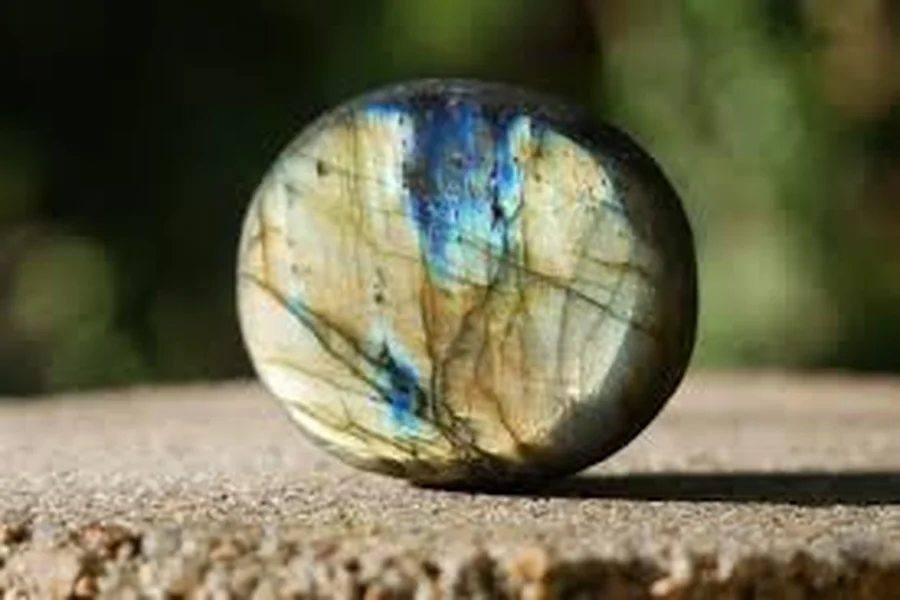
The answer to the question Where to Find Labradorite is not known to many rock collectors and mineral enthusiasts and it becomes clear after they are introduced to the notorious shimmering colours of the stone. Labradorite is a special type of feldspar which is characterized by an optical phenomenon known as labradorescence. At angles when the light reaches the surface of the stone we have flashes of blue, green, gold and occasionally purple in the structure of the crystals.
This iridescent effect of labradorite makes it one of the most fascinating minerals to be seen in the world. In spite of the fact that the stone might look to be gray or dark on the surface, the inside colors become known when the surface is polished or when the light reflects the internal layers.
Labradorite is created deep in the igneous rocks and results when the molten material gradually cools down and gives a chance to the feldspar crystals to grow. Geological processes make these rocks closer to the surface after many millions of years and through erosion, the mineral is exposed.
Countries in the world that have deposits of labradorite are numerous yet some areas are more renowned in creating quality specimen. Knowledge of the locations and the manner by which the stone structures are manufactured aids the collectors in identification of possible sources.
We will consider in this guide some of the most well known places of labradorite and the geological factors that form it.
Canada: The Original Labradorite Source
Labradorite was discovered and named in Canada. That mineral was discovered in the late eighteenth century on the Labrador Peninsula on northeastern Canada.
The rugged coast land of Labrador is composed of massive rock structures that were igneous and where the labradorite crystals developed deep under the earth. These rocks were revealed to erosion over time along coastal and cliffs.
A large number of the earliest specimens were taken along the coast, where waves and weather gradually exposed fragments of labradorite in the larger rocks.
Most of the modern gem quality labradorite that is used in jewelry is not of Canada although the mineral originated in the country but in other nations where there is larger deposit.
Nevertheless, Labrador is a significant historical site of study of this mineral.
Madagascar: A Major Source of Gem Quality Labradorite
Madagascar is considered to be one of the key sources of labradorite in the modern world. The island has vast igneous rocks formations which are producing huge crystals with colorful flashes.
The deposits of labradorite stones that are used in jewelry today are mostly found in Madagascar since an interior quality of the material can be cut and polished.
The labradorites of Madagascar often have blue, green, and golden flashes. Other rare specimens even exhibit a variety of colors on the surface.
The Madagascarian miners cut the mineral in slabs or polished stones to bring out the internal color patterns of the mineral, which is found in the form of large rocks.
Due to its large quantity and quality, Madagascar is a significant source of supply of labradorite to the international gemstone market.
Finland: Home of Spectrolite
Finland is a producer of a special kind of labradorite, spectrolite. This is a variety that is known to exhibit extremely bright and varying colors such as purple, orange and bright blue.
Spectrolite was discovered in the World War II when Finnish soldiers who constructed defense monuments found strange stones in the area.
The deposits are mainly found in southeast Finland whereby the geological events were very special to enable the feldspar crystals to acquire powerful optical influence.
Spectrolite can be regarded as one of the best types of labradorite due to its strong color flashes.
These stones are highly valued by collectors and jewelers because of their supernatural beauty and the fact that they are rare compared to the usual labradorite.
United States: Labradorite Deposits
Labradorite is also found in the United States but they are not very well known as compared to Canada or Madagascar.
There are deposits found in the states where fabrics of igneous rock develop considerably like Oregon, New York, and the Appalachian region.
Internal reflections can also produce the same optical effect in an example of feldspar commonly referred to as sunstone in Oregon.
Other regions of the country have labradorite crystals in basalt and gabbro rock structures that were formed due to the ancient volcanic activity.
These deposits are not necessarily sites where one is likely to find large gem quality stones, but they are important rock collecting and geological sites.
How Labradorite Forms in Nature
Knowledge of the formation of labradorite can explain the presence of the mineral in some parts of the world. The mineral is of the feldspar category and is formed as magma solidifies slowly under the surface of the earth.
Minerals start to form when molten rock cools down. Labradorite crystals constitute the feldspar mineral family in the igneous rocks like basalt and gabbro.
It is the well-known color flashes that take place due to microscopic layers within the crystal structure. These layers bounce back the light of varying wavelengths to produce the shimmering effect called labradorescence.
That is what makes labradorite stand out among other minerals as a result of this optical phenomenon.
These rock structures are revealed over time due to tectonic activity and erosion making the mineral be found nearer to the surface.
Tips for Finding Labradorite in the Field
Labradorite is a mineral that is not easily encountered in nature. The surface of the stone usually looks dull gray in case it is worn out and it is easy to overlook it.
The collectors tend to look in places that bear out igneous rocks like basalt cliffs, mountain slopes, or rocky coastal areas.
One such aid that can be used is to study the stones under the sun, at various angles. In the right position, light can give a flash of blue or green to the stone.
The colors can also be improved by the wet surfaces and that is why most of the collectors carry water bottles whilst on the hunt.
At times the labradorite crystals can be found inside some of the rocks when one breaks them open.
Time and knowledge of the local geology will increase the likelihood of the finding of this mineral a lot.
Final Thought
The locality of labradorite relates nearest to the geological setting in which the crystals of feldspar develop in igneous rocks. The formation of the deposits in the regions like Canada, Madagascar, Finland, and some areas in the United States was influenced by the actions of ancient volcanoes and tectonic activities.
Even though labradorite may not seem remarkable, unless one takes a closer look and discovers all those hidden glimpses of colours, it is one of the most interesting minerals one can encounter in nature. These colorful reflections are made because of distinct crystal structures which intermingle with light in amazing manners.
To both collectors and geology lovers, the hunt of labradorite is an adventure as well as a chance to enjoy the aesthetically rich mineral in a world of unmatched beauty.
FAQs
Where is labradorite commonly found?
Labradorite is commonly found in Canada, Madagascar, Finland, and some regions of the United States where igneous rocks are present.
Why is labradorite called labradorite?
The mineral was named after Labrador in Canada where it was first discovered.
What makes labradorite show colorful flashes?
The flashes occur due to internal layers within the crystal that reflect light in different wavelengths.
Is labradorite rare?
Labradorite itself is not extremely rare, but high quality stones with strong color flashes are more valuable.
Can labradorite be used in jewelry?
Yes. Labradorite is often cut and polished into cabochons and beads for jewelry because of its unique color effect.