
Where to Find Amethyst – Locations, Types, and Tips for Collecting
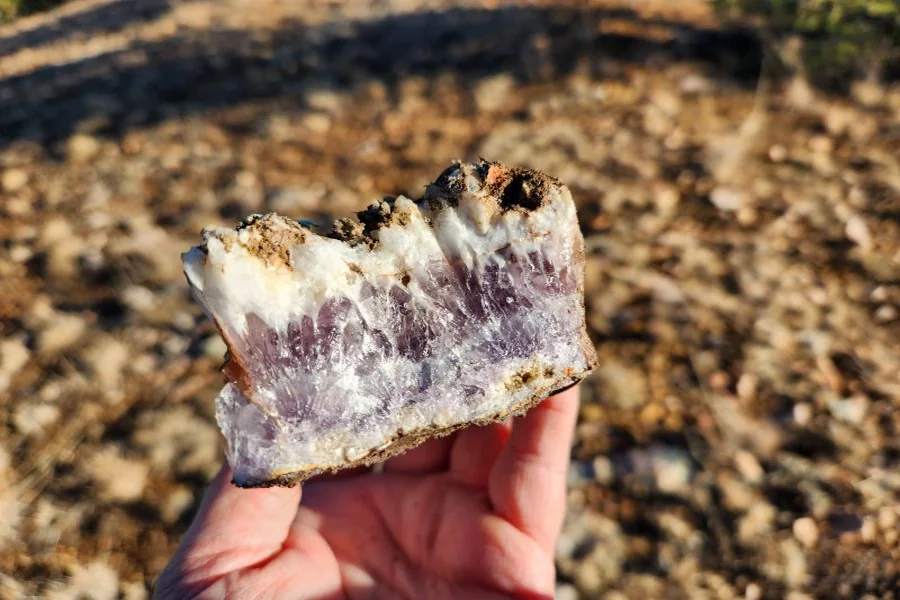
The Knowing Where to Find Amethyst information is of great use to the collectors, geologists, and crystal lovers. Amethyst is quartz with a purple hue, which is valued because of its color and clarity, as well as, metaphysical abilities. Knowing the Where to Find Amethyst assists those interested in the hobby and professional to locate areas where the mineral occurs, know the best specimen, and understand the geological mechanisms of its formation.
Amethyst is found in volcanic rocks, geodes and alluvial deposits. Its deep violet coloring is between a light lilac to a deep purple occasionally with undertones of red or blue. The study of Where to Find Amethyst enables the collectors to find the crystals, their sources, and the variation of color, size, and clearness.
Global Locations Where Amethyst Is Found
In the analysis of Where to Find Amethyst, it is apparent that this mineral occurs in all parts of the world. The best producers of good quality amethyst are Brazil and Uruguay. These countries have large geodes that form deep purple crystals that are of great value to the collectors.
Africa and especially Zambia is credited to have produced some of the richest violet amethyst crystals that are given high clarity. There are also large deposits in other African nations like Namibia and South Africa.
There are also large amethyst deposits in North America. The United States has a reputation of producing amethyst in the state of Arizona, North Carolina, Georgia, and Maine which is commonly found in geodes and veins. The Thunder Bay area in Canada is the producer of amethyst that has its own character of red hematite inclusions, thus it is not like other deposits in the world.
Smaller though significant deposits can be found in Europe such as amethyst in Russia, Germany and the United Kingdom. These are usually darker in colour and are used in jewellery and ornamental use.
Types of Amethyst
Knowing where to find Amethyst also entails knowing the types of Amethyst. Geode amethyst is generally in Brazil and Uruguay where they are hollow and have large and well-formed crystals as their lining.
Prasiolite or green amethyst is a natural mineral or heat-treated purple amethyst. This one is more uncommon and is located only in few places in North and South America.
One of the most valuable types is the Siberian amethyst which is deep violet with red flashes and is mainly found in Russia. Chevron amethyst, having striations of white quartz with purple amethyst is usually present in Africa and Brazil.
Understanding the types of amethyst helps collectors and enthusiasts identify which specimens are likely to be of higher value and where to focus their search.
Geological Formation of Amethyst
Knowing Where to Find Amethyst also involves knowing the formation of the amethyst. Amethyst is formed in silica dominated settings, usually in geodes or volcano cavities. Its unique purple color is because of heat, pressure, and the presence of impurities of iron.
The origin of the process is the penetration of mineral rich water into cracks of rocks where silica is deposited over millions of years. Untraceable traces of iron are oxidized under certain conditions to give violet and purple. The study of the formation process aids the collectors to predict areas where there would be good amethyst deposits.
Tips for Collecting Amethyst
Collectors ought to be mindful of legal and safety issues when seeking Where to Find Amethyst. Most of the areas where minerals are collected in the public do not need permission, whereas on private land, permission is needed.
Rock hammers, chisels and safety gear are necessary. Geodes are commonly subject to be broken gently to discover crystals within them. The presence of volcanic rocks, basalt flows or sedimentary cavities in the areas enhances the chances of finding good amethyst.
Color and clarity aid in differentiating the high quality specimens. Deep violet and transparent crystals with the fewest inclusions would be more useful. Knowing Where to Find Amethyst will guarantee that the collectors are in areas and rock structures where these conditions apply.
Uses of Amethyst
Amethyst is not only a beautiful stone but also a practical and spiritual stone. Amber designers often make jewellery in the form of rings, necklaces, earrings, and pendants made out of amethyst. Its color is vibrant and long lasts making it ideal to use in decoration.
Amethyst is said to have the ability of protecting, improving intuition, and making oneself calm and clear in metaphysical practices. Geodes or crystals can also be collected as exhibition items or used by meditators.
Geologists and mineralogists also study amethyst in order to learn more about silica-rich geological settings and mineral formation. This causes it to be aesthetic and scientifically useful.
Final Thought
The source Learning Where to Find Amethyst offers some understanding of how it forms, its types, and distribution across the globe. Amethyst is a multi-purpose and popular mineral in either big Brazilian geodes or rare Canadian specimens.
Knowledge of those factors, which affect quality color, clarity, size, and crystal formation, assists collectors, hobbyists and researchers of identifying valuable specimens. The analysis of Where to Find Amethyst improves the appreciation of it in terms of the natural beauty, scientific and spiritual values.
FAQs
Where is the most amethyst found in the world?
Brazil and Uruguay are the largest producers of high-quality amethyst geodes.
Can amethyst be found in the United States?
Yes, notable locations include Arizona, North Carolina, Georgia, Maine, and Canada’s Thunder Bay region.
What type of amethyst is the most valuable?
Siberian amethyst with deep violet color and red flashes is considered among the most valuable types.
How do I identify high-quality amethyst?
Look for deep violet color, transparency, minimal inclusions, and well-formed crystal points.
Are there rare types of amethyst?
Yes, prasiolite (green amethyst), chevron amethyst, and Siberian amethyst are rarer and more valuable.