
Magnesite vs Howlite – Differences, Appearance, and Value
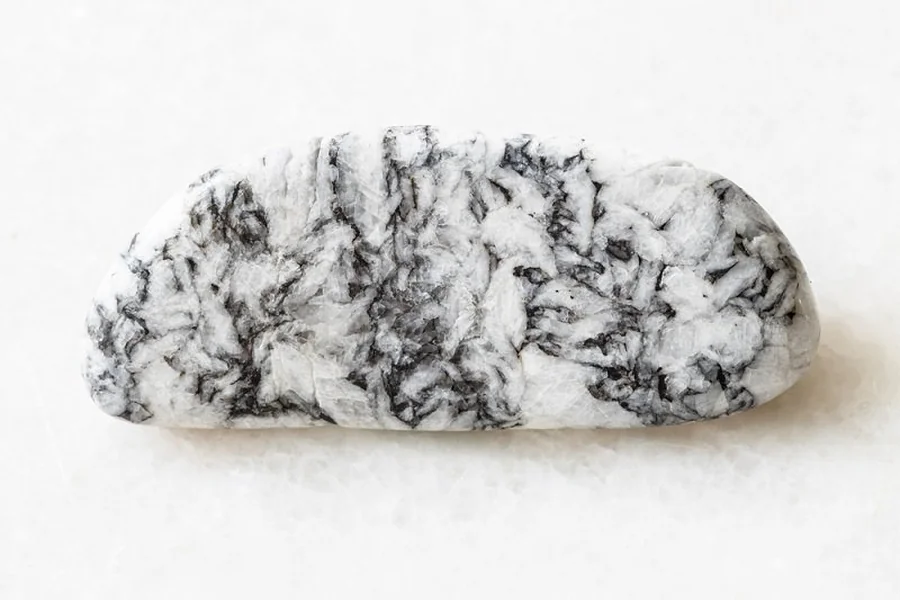
The aspects that have been compared in magnesite vs Howlite include oftentimes a comparison between the two gemstones. These two stones may be almost the same at first sight. The two minerals tend to have a white or cream color with gray streaks all over the surface. Due to this resemblance, they get easily confused with each other in jewellery and decorative stones market.
Although magnesite and howlite look very similar, they are absolutely different minerals with the different chemical composition and geologic origin. They also vary in hardness, crystal structure and how they respond to some treatment. The knowledge of these variations assists collectors in trying to know more precisely the stones and not to become confused when purchasing jewelry or mineral specimens.
The comparison of these stones is another reason that is commonly used based on the fact that they were used in the trade of gems. Both of them are occasionally dyed to look like turquoise or other colored gemstones. Due to such practice, it is particularly important to identify the natural features of each stone.
This guide will discuss the properties of magnesite and howlite, their formation mechanism, and the main distinctions that can be used to differentiate between the two.
What Is Magnesite?
Magnesite is a mineral that is mainly made up of magnesium carbonate. It develops in geological conditions on the rock formations containing magnesium rich rocks that are chemically altered. The processes commonly take place in the sedimentary deposits or in regions where ultramafic rocks are exposed to water and carbon dioxide.
Magnesite can be found naturally white, gray or slightly yellowish. Other specimens have brown or gray veins which form interesting designs on the surface.
Magnesite is typically built up in huge or granular forms but not in the form of crystals. Due to its malleable nature, it can be easily carved and cut into shape to be used as decorations.
Industrial use of this mineral has also been realized due to the richness of magnesium in it. It is very significant in the manufacturing of refractory materials, which are substances that are able to resist very high temperatures.
Magnesite commonly takes the form of beads or cabochons in jewelry in the gemstone market. It is sometimes stained blue or green, to look like turquoise.
What Is Howlite?
Howlite: This is a calcium borosilicate mineral, which is commonly formed in the evaporate deposits whereby the boron rich fluids intermix with the other minerals. The mineral was discovered in the nineteenth century by a Canadian geologist named Henry How whose name gave the mineral its name.
The stone is typically white, with gray veins or black, and is of the form of marble. These veins arise as impurities are incorporated in the crystal set up as the mineral is developed.
Howlite in contrast to magnesite tends to occur in nodular form of mass resembling rounded lumps attached to the rest of the rock.
Howlite is somewhat soft and porous hence can easily absorb dyes. Owing to this quality, it is usually stained in blue and marketed as fake turquoise.
Natural howlite has continued to be used in jewellery and decorative items because of its smooth polished finish and characteristic veining.
Un treated specimen is often valued by the collectors because of its natural appearance.
Magnesite vs Howlite: Visual Differences
In the case of magnesite vs howlite, one of the initial details to be identified is visual appearance. Both minerals may be white with dark veins, however, the pattern of two usually is not exactly the same.
Howlite generally has more veins of spider web type spread upon its face in the branches of the surface. These are veins that are dark-grey or black.
Magnesite tends to portray less decisive or subtle veins. The lines can be brownish or gray as opposed to deep black.
The stone texture may also offer some clues. Howlite is frequently slightly chalky or matte in appearance before being polished, and magnesite might be more smooth as it occurs.
But these visual differences are at times subtle particularly when the stones are polished and are worn as jewels.
Due to that fact, other properties, including hardness or chemical make-up, might need to be studied to determine it accurately.
Composition and Formation
One of the most important differences between these two minerals is their chemical composition.
The magnesium carbonate is the major component of magnesite. It is created by the process of alteration of magnesium abundant rocks due to the chemical reactions that occur between the rocks and the water and the carbon dioxide.
This is usually done in metamorphic setting or in the sedimentary rocks that are high in magnesium.
On the contrary, howlite has calcium, boron, silicon, and oxygen. It develops in evaporite settings where mineral rich fluids are evaporated leaving behind crystalline deposits.
Due to these various processes of formation the magnesite and howlite are not often found in the same geological environment.
The physical properties of the stones also vary according to these differences in composition.
Hardness and Physical Properties
Another reason that can be used to differentiate magnesite and howlite is hardness. Magnesite is usually between 3.5 and 4.5 in Mohs hardness scale.
Howlite is a little softer and normally ranges between 3 to 3.5 on the same measure.
Even though both the minerals are relatively soft when compared to such mineral gems as quartz, this slight variations of hardness might assist the mineral collectors to distinguish between them.
The howlite is also porous as compared to magnesite; that is why it absorbs dyes more readily.
Magnesite is also a little more dense and less porous; therefore, it is partially less susceptible to dye penetration.
These physical variations are also significant in the gemstone market in which the two stones are occasionally being changed to be used ornamentally.
Uses in Jewelry and Decoration
The two minerals are also common in jewelry and decorationals due to their ability to polish and exhibit beautiful designs.
Howlite is usually molded into beads, cabochons and carved ornaments. Due to its easy take-up of dyes it is often stained so as to look like turquoise or other gems.
The beads and carvings are also done in magnesite, but are not usually dyed so extensively as howlite.
Besides the use of magnesite in jewelry, magnesite is also used in industries because of its magnesium. It is utilized in manufacture of refractory bricks and any other high temperature materials.
Howlite does not share the same industrial purpose and is still popular in the decorative stones collections.
Both of the minerals are interesting to a collector, providing fairly inexpensive jewelry material made out of a gemstone.
Final Thought
Magnesite vs Howlite brings out the differences in the composition, formation and physical characteristics between two minerals that are similar in appearance. Although the two stones usually exhibit dark veins on white surfaces, their chemical composition and geological features distinguish them.
Magnesite is a product of magnesium enriched environment and has significant use in industry. Howlite is a product of evaporation that is common in jewelry because of its unique veining and capacity to absorb dyes.
To collectors and jewelry lovers, these differences are understood to be able to identify and appreciate each stone with its own unique features.
FAQs
What is the main difference between magnesite and howlite?
Magnesite is a magnesium carbonate mineral, while howlite is a calcium borosilicate mineral with a different chemical composition.
How can you tell magnesite and howlite apart?
Howlite usually has darker spiderweb style veins, while magnesite often shows softer gray or brown veining patterns.
Is howlite commonly dyed?
Yes. Howlite is frequently dyed blue to imitate turquoise because of its porous structure.
Which stone is harder magnesite or howlite?
Magnesite is slightly harder, usually ranking around 3.5 to 4.5 on the Mohs scale compared to howlite at about 3 to 3.5.
Are magnesite and howlite used in jewelry?
Yes. Both stones are commonly polished into beads, cabochons, and decorative carvings for jewelry.