
Gold in Quartz Rock Value and What Affects the Price
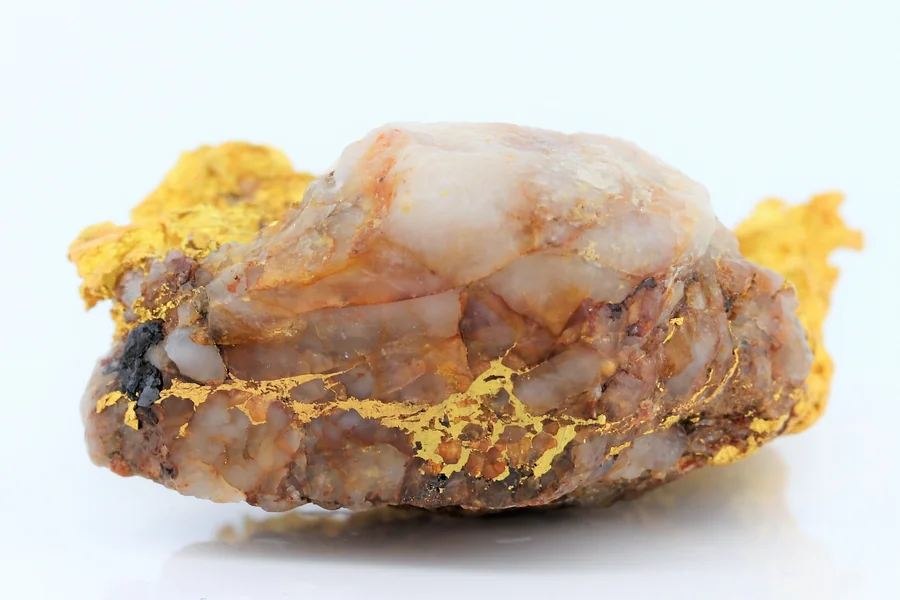
Gold in Quartz Rock Value is one of the subjects that interest prospectors, rock collectors and gemstone lovers. The quartz is one of the most widespread minerals in the crust of the Earth, however, once gold is introduced into it, the stone may be much more useful. Gold bearing quartz which is also sometimes known as gold quartz or gold in quartz ore has been the subject of an age old fascination amongst miners and collectors.
These are rare rocks that are made when the gold bearing hydrothermal fluids circulate through cracks and fissures in the rock formations in the underground. When the liquid cools, the quartz forms on the cracks as the particles of the precious metal, gold, are entrapped inside the stone. With time such a process may produce veins of quartz with noticeable flakes or stripes of gold.
Though quartz is not uncommon per se, the presence of natural gold as a part of quartz can be very rare depending on the amount and size of the metal. These stones are extremely varied in terms of value depending on aspects like the amount of gold in them, quality of the specimen, their size and their demand by collectors.
Knowing the formation of gold in the quartz and factors that affect its value also allow collectors to know when a particular piece is just a curiosity or a valuable one.
How Gold Forms Inside Quartz
The entire process of gold in quartz occurs during the hydrothermal process of the crust of the earth. In such environments hot water with dissolved minerals flows in fractures of neighboring rock.
Silica will start to crystallize into quartz as the fluid cools down in these fractures. Meanwhile, the dissolved gold can be deposited out of the solution, and fall between the quartz structure.
Millions of years of the deposits develop into quartz veins filled with visible particles of gold or streaks. Occasionally the gold is found in the form of fine flakes which are scattered through the rock, and other specimens consist of veins of metal.
These veins are later brought near the surface of the earth through tectonic activity and erosion. This is done to enable the prospectors and collectors to discover the gold pieces that have quartz in some mining areas.
The formation has its own geological requirements hence it is quite rare to find good specimens of gold quartz.
Gold in Quartz Rock Value Factors
There are a number of significant variables that determine the gold value in quartz specimens. The quantity of gold in the rock is one of the most evident. Periodic stones which have larger visible veins or gold nuggets usually fetch higher price.
The specimen size is also important. Big and heavy accented pieces of gold can be more valuable than tiny fragments.
Visual appeal is another important factor. Certain gold quartz specimens have beautiful effects of dark gold on white quartz. Collectors tend to seek these aesthetically pleasing works of art very often.
The value can also be influenced by purity of the gold. Quartz gold is normally very pure in nature as compared with other types of ores.
Lastly there is the significant role of rarity. Some of the ancient mining fields were known to have yielded some of the well known gold quartz specimens that today are sought after by collectors.
The combination of these factors in the determination of the final market value of a gold bearing quartz rock is achieved.
Collector Value vs Gold Content Value
There are two ways of valuing gold in quartz. The former is founded on the raw gold that is present in the stone. Here the value will be based on the quantity of pure gold that could be obtained out of the rock.
But what numbers of specimens are really worth more as collector pieces than as such of metal. The specimen turns into a natural piece of art when the gold is visible and therefore creates patterns in the quartz.
Attractive gold quartz specimens usually fetch a high price due to their rarity and their visual appeal.
Indicatively a piece containing little gold can still be precious on the event that the gold will be in a dramatic vein on the surface.
Conversely, a rock that has dispersed microscopic particles of gold might have minimal collector importance even though it could have even greater weight of gold.
Such disparity is the reason behind the sale of certain gold quartz specimens at thousands of dollars and some at much higher prices based on their weight in gold.
Famous Gold Quartz Mining Regions
There are some areas within the globe that are famous in the mining of gold quartz. The historic gold mining districts in California are some of the well-known sources.
In the XIX century, gold miners in Sierra Nevada mountains found that there were a lot of gold-bearing quartz veins. Certain of these veins furnished some very fine specimens, now on exhibition in museums.
Another major source of gold quartz is Australia. A number of mining areas there have yielded good specimens of high quality with thick veins of gold running through white quartz.
Others are found in a section of Canada and South Africa where the hydrothermal deposits developed comparable mineral structures.
These areas gained popularity in the times of gold rush when miners were seeking gold deposits in the form of quartz veins.
Even collectors today appreciate specimens of historic mining districts due to geological and historical value.
How to Identify Gold in Quartz
It takes time to note that there is gold in quartz. Natural gold will normally be in the form of a shiny metallic yellow having a reflective surface.
Real gold does not fade or change its color with time like the minerals like pyrite that may resemble gold.
The particles of gold found in quartz can be in the form of a flake, thin vein, or small nuggets. The metal is sometimes diffused along cracks or fissures in the rock.
Hardness testing may also be used in identification. Gold is not a tough mineral, it can be scratched easily compared to the other hard minerals.
A closer look with the help of a magnifying lens can tell more about the structure of the metal in the quartz.
To collectors, one of the valuable skills to learn in assessing possible gold quartz is the ability to recognize these features.
Why Gold Quartz Is Popular Among Collectors
Gold quartz is greatly popular with mineral collectors as it is a combination of two interesting things in nature. A combination of quartz and gold gives a glowing metallic contrast and crystalline underpinning.
This combination of visuals causes numerous specimens to resemble natural paintings made by geology processes almost perfectly.
The association with ancient gold mining areas is also valued by collectors. Most of the famous specimens were found during gold rush times when prospectors made discoveries of spectacular mineral deposits.
Gold quartz of high quality is relatively uncommon and thus well-preserved specimens can command high prices as additions to mineral collections.
These stones are usually used as specimens in museums and in individual collections to show the natural beauty that was the result of the mineral formation process.
Final Thought
Quartz rock Value of Gold relies on a mixture of features such as the amount of gold, the size of specimen, the attractiveness of the rock and its uncommonness. Whereas others are prized and treasured on how much gold they have, others are regarded as very valuable collectors due to their peculiar look.
The fact that gold is formed in quartz veins shows a clue to very strong geological processes expounded deep inside the earth over millions of years. These operations formed natural combinations of minerals that are of great interest to collectors and prospectors of the present day.
To mineral and gold prospectors, gold bearing quartz is a source of scientific interest as well as valuable discovery.
FAQs
What is gold in quartz rock?
Gold in quartz rock is a natural stone where gold particles or veins formed within quartz during hydrothermal mineral deposition.
How much is gold in quartz rock worth?
The value depends on the gold content, size of the specimen, visual appeal, and collector demand.
Can gold be visible in quartz?
Yes. In some specimens gold appears as visible flakes, veins, or nuggets embedded within the quartz.
Where is gold in quartz commonly found?
Gold quartz specimens are often found in historic mining regions such as California, Australia, and parts of Canada.
Is gold in quartz rare?
Quartz itself is common, but specimens with large visible gold veins are relatively rare and valuable.