
Gemstones Found in South Carolina – Types and Locations
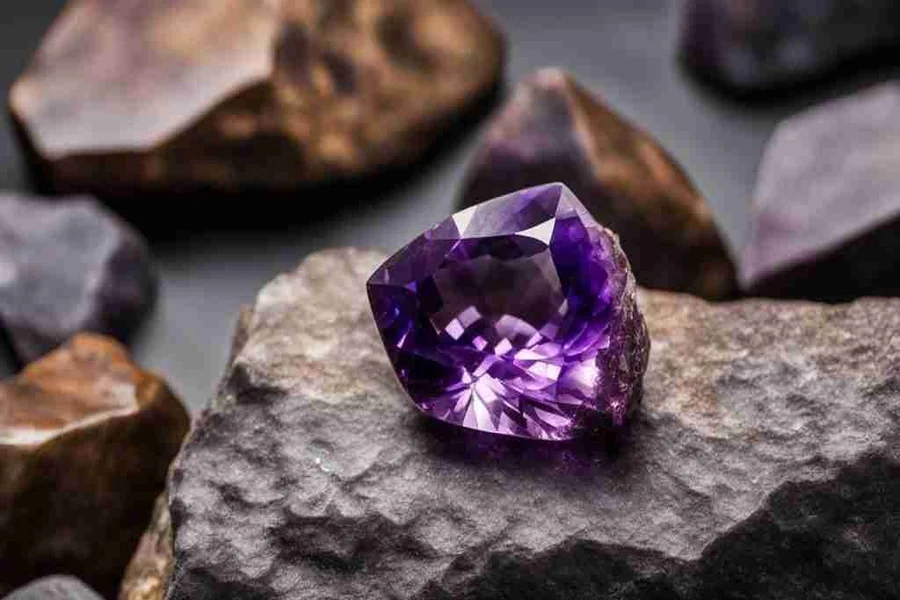
South Carolina can be referred to as the land of the coast and ancient towns, but there is more to it, because the land is resting on a very interesting geological background. The rocks and minerals in the region are formed through tectonic activity, volcanic forces and erosion over millions of years. Due to such a complicated history, a lot of collectors and rock enthusiasts have got interest in the Gemstones Found in South Carolina.
The state is also known to have several types of natural gemstones, such as the shining quartz crystals and the colorful garnets. Although South Carolina is not a gemstone state as popular as certain western states, the state is, nevertheless, surprisingly rich in minerals that appeal to the hobbyists, geologists, and rockhounds.
To know more about Gemstones Found in South Carolina, we need to consider the geology of this state, the minerals that are found in it, and in what regions the stones occur occasionally. Through patience and knowledge, the various beautiful stones found concealed in the rivers, mountains, and mineral deposits of the region might be revealed to the collectors.
Geological History of South Carolina
The range of the gemstones which are discovered in South Carolina is tightly linked with the geology of the state. Millions of years ago the region felt the impact of the strong tectonic forces when the continental plates collided and moved. These processes contributed to shaping the Appalachian Mountains and forming the conditions in which minerals were able to crystallize in deep underground areas.
In the process of these geological activities, existing rocks were subjected to heat and pressure which caused them to be changed into new mineral formation. Pegmatite deposits, which are reputed to produce large crystals and gemstones, were also formed with the help of igneous activity.
Overtime these mineral deposits were slowly brought nearer to the surface through erosion. Rocks were transported by rivers and brought to gravel beds or even to banks of streams.
Due to these processes, gemstones may occur in various sections of the state, especially in those regions which are related to the Appalachian geological system.
Amethyst and Quartz Crystals
Quartz crystals are some of the most famous gemstones in the area. Quartz is a mineral that is found in large quantities all throughout the earth, and South Carolina has a few sites where the quartz is found in crystalline forms.
Some amethyst, a kind of purple quartz, has been reported in the state. The amethyst derives its violet color due to trace elements of iron and natural radiations during the formation of the crystals.
Quartz crystals tend to occur in pegmatite veins or mineral cavities where silica rich fluids slow down to cool. The slowing of the cooling process gives the crystals time to develop into highly defined forms.
Quartz and amethyst are also sought after by collectors in places that have exposed rocks or mineral rich soils. Although big gem quality specimens are not common, smaller sized crystals may come by in nature.
Quartz is the most common mineral that is collected in the area because it is strong and appealing to the eyes.
Garnet Deposits in the Region
Another example of South Carolina gemstones is Garnets. These minerals are also usually in the form of small reddish red or reddish brown crystals which are embedded in metamorphic rocks.
Garnets are minerals that are formed by the metamorphism of minerals in rocks under extreme pressure and heat. With a time these conditions give the garnet crystals an opportunity to form inside the rock matrix.
Garnets are commonly located in regions where the metamorphic rocks are bare in South Carolina. Garnets may be moved by streams and rivers downwards into sediment beds.
Though a great number of the garnets in the area are small, they still appeal to the collectors due to their rich colour and natural geometrical crystal forms.
In other instances the garnets may be polished and put in decorative stones or jewelry, but the vast majority are collected as a source of geological interest.
Beryl and Other Rare Minerals
Beryl is another interesting mineral which can be found in South Carolina and which is sometimes linked with the gemstones. Beryl is a minerals family which entails such renowned gem stones like emerald and aquamarine.
Although the gem quality of emeralds is very rare in the state, some beryl crystals have been discovered in pegmatite formations. These crystals can be in the form of pale green, blue or be colorless depending on the mineral composition.
The deposits of pegmatites have been known to generate huge mineral crystals due to the slow cooling of magma located deep in the underground. These deposits may have some unusual or rare mineral together with favorable stones such as quartz and feldspar.
Other minerals that are sometimes found in South Carolina are the tourmaline and corundum. These gemstones are not quite common, but they bring variety to the state.
Even tiny mineral specimen can be very informative to the geological history of the area to the collector wanting to know more about geology.
Riverbeds and Natural Deposits
Exploration of riverbeds and gravel deposits is considered to be one of the most workable methods according to which collectors seek gemstones located in South Carolina. Rocks and minerals found in the neighbouring hills and mountains are naturally moved along by flowing water.
When rivers become sluggish, the coarse minerals occasionally become deposited in bars of gravel or in the shallow part of the stream. Such deposits could have tiny fragments of gemstones, which are interspersed with common stones.
Simple tools like screens or sieves are usually used by collectors to sieve through gravel. Close examination is necessary since gemstones can be left like normal rocks until they have been washed or polished.
New materials may also be revealed through rainstorms and seasonal flooding which moves the sediment and reveals the hidden stones.
Even though gemstone river hunting is tedious, most of the collectors find it exciting to explore the natural sceneries in the search of concealed mineral wealth.
Responsible Collecting and Local Regulations
Collecting rules and environmental guidelines are also to be taken into consideration by every person who is interested in searching gemstones. There are some public lands, which permit personal use of rocks, which are limited and others may be restricted.
Sometimes, national parks or areas that are under protection do not allow people to take rocks or other minerals to maintain the beauty of nature. Before a collector gathers materials, he should always look into local regulations.
It is also important to respect personal property. An individual or organization should not be collected on its land without its permission.
Proper collecting includes leaving the place in a good condition as well. Never disturb the habitat of wildlife and remember not to destroy the vegetation around.
Adherence to these guidelines will make rock obtaining sustainable and environmentally friendly to the natural resources.
Final Thought
Gemstones Found in South Carolina are a story of geological history that has been created through building mountains, volcanoes, and natural alterations that took millions of years. Though not a famous region in terms of gemstones, the state has a number of different minerals that could be of interest to collectors and lovers of geology.
Sparkling quartz crystals and amethyst, deep red garnets, and some rare beryl finds, the area gives numerous possibilities of studying and admiring natural gemstones. Diversity of stones in the state is also created by riverbeds, mineral veins and metamorphic rock formation.
South Carolina offers a geological setting whereby one can view the history of the earth in the rocks under their feet, and the outer world being an exciting adventure that includes outdoor nature discovery and exploration.
FAQs
What gemstones are found in South Carolina?
Common examples include quartz crystals, amethyst, garnet, and occasionally beryl or tourmaline minerals.
Where can gemstones be found in South Carolina?
They are often found in riverbeds, gravel deposits, and areas with exposed metamorphic or pegmatite rock formations.
Are garnets common in South Carolina?
Small garnet crystals can be found in certain metamorphic rocks and sometimes appear in stream sediments.
Can amethyst be found in South Carolina?
Yes small amethyst crystals have been reported in some mineral deposits, although large specimens are uncommon.
Is it legal to collect gemstones in South Carolina?
Rock collecting may be allowed on some public lands, but national parks and protected areas often prohibit removing rocks.
Do rivers contain gemstones in South Carolina?
Yes rivers sometimes carry gemstones from surrounding rock formations and deposit them in gravel bars or stream beds.