
Alexandrite vs Amethyst – Key Differences and Value
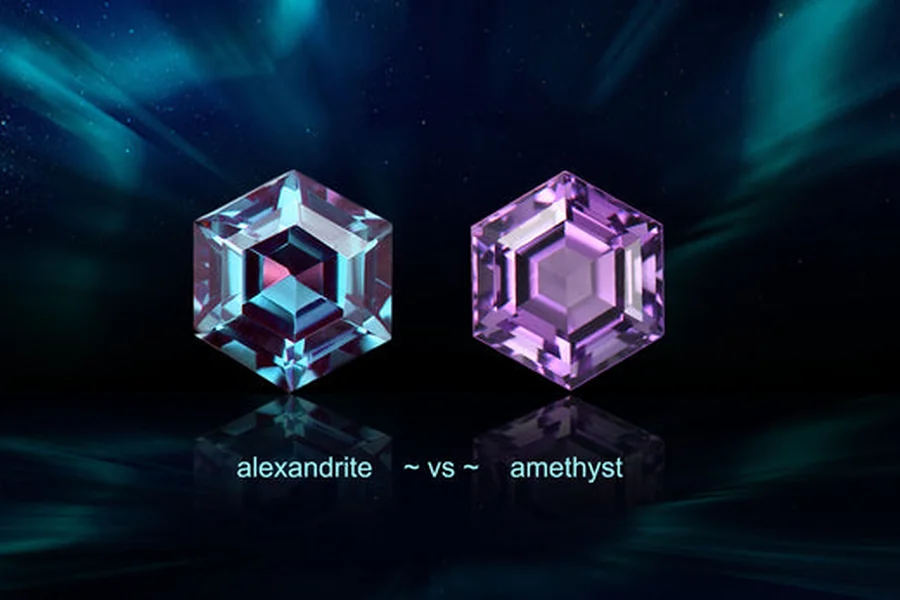
The comparison of Alexandrite and Amethyst is one which can be frequently heard by the admirers of enigmatic stones, by those interested in jewelry, and who are interested in beautiful colored minerals. The two stones are both loved in their beautiful purple or reddish color, however, the two stones differ in a lot of ways regarding rarity, value and physical characteristics. Amethyst is well-known and fairly common, but alexandrite can be regarded as one of the rarest gemstones that the world contains.
The two gemstones also vary with regard to the way they respond to light. Alexandrite is the well-known crystal with an amazing effect of changing colour, amethyst is usually purple in colour. Their formation conditions, chemical structure and the value in the market are also very different.
This knowledge of the differences assists the buyers, collectors and the lovers of jewelry to value the uniqueness of each stone. This guide shall look into their origin, characteristics, and the way they differ.
What Is Alexandrite?
Alexandrite is a very rare gemstone, which is a member of the chrysoberyl family of minerals. The best known characteristic of it is the dramatic effect of changing its color. When the stone is subjected to daylight or fluorescent light it appears green or bluish green, whereas when subjected to incandescent light, it changes to red or purplish red.
This variation of color is due to the interaction that chromium in the crystal structure possesses with various light sources. The crystal takes on some of the wavelengths of light and scatters others, which gives an illusion of the stone changing color.
Alexandrite was initially found in the Ural mountains in Russia during the 1830s. He named the gemstone after Tsar Alexander II as the gem has green and red color which resembled the imperial Russian military colors.
However, alexandrite is also present in other country today like Brazil, Sri Lanka as well as Madagascar, but only high quality stones are extremely rare.
Alexandrite is one of the most valuable gemstones in the market due to its rarity and peculiarities of various optical characteristics.
What Is Amethyst?
Amethyst is a famous type of quartz, which has shades of purple that vary between pale lavender to deep violet. Amethyst, in contrast to alexandrite, does not vary in color according to the conditions of change.
The amethyst purple colour is a result of a little bit of iron in the quartz crystal structure and natural radiations of rocks surrounding it.
The amethyst is created in geodes and in the cavities within the volcanic rocks on which mineral rich fluids deposit silica gradually. Through these environments, the crystals are able to grow in sharp structures which in most cases take shapes of clusters.
The country that has large deposits of amethyst includes Brazil, Uruguay, and Zambia. Due to the relative abundance of these deposits, amethyst is highly present in the jewelry shops and gemstones market.
Although it is available, amethyst is one of the most used gemstones as it has a vivid color, and it is cheap.
Alexandrite vs Amethyst: Color Differences
Color behavior is one of the most outstanding differences between the Alexandrite and Amethyst compared.
Amethyst is usually purple in color. Its tint can be light lavender to very dark royal purple depending on the amount of iron impurities.
However, its ability to change color is known about Alexandrite. It is green or teal under daylight, and when it is hot indoors it changes to red or purplish red.
This optical phenomenon renders alexandrite not the least interesting as the stone can even look totally different in various lighting conditions.
Whereas amethyst is beautiful with its purple colors, alexandrite is much stranger because of its color change.
Rarity and Market Value
Rarity is another significant distinction between these gemstones. Alexandrite is ranked as among the rare gemstones throughout the globe. There are high quality stones that are very color change and also of good clarity which may attract very high prices.
Depending on carat and origin, fine alexandrite stones can be sold at thousands of dollars.
Amethyst, however, is not that rare. The gemstone is very affordable and accessible across the world due to the huge deposits that exist.
Even the finest quality amethyst stones tend to be much more cheap than alexandrite. Majority of the polished amethyst gems cost between few dollars to few hundred dollars in terms of size and color.
The rarity difference is one of the main causes why alexandrite is regarded as a luxury gemstone when amethyst is affordable to the majority of purchasers.
Durability and Physical Properties
The other element that can be used to compare these stones is durability. Alexandrite is a chrysoberyl and it is approximately 8.5 on the Mohs scale of hardness. This makes it extremely strong and appropriate to the daily use jewelry like rings.
Amethyst has a hardness amounting to approximately 7 on Mohs hardness scale since it is a type of quartz. It is not as hard as alexandrite, although it is relatively tough.
Both gems may be worn as jewels, although the alexandrite is more hard, and consequently, it is more resistant to scratches and abrasions.
The crystal structures are also different. The formation of both amethyst and Alexandrite is in orthorhombic and hexagonal quartz crystals respectively.
Such structure variations make these materials have different optical characteristics.
Uses in Jewelry and Collecting
Gemstones can be used in jewelry, but these have different applications in the market.
Amethyst is usually taken in rings, necklaces, earrings and bracelets. Due to its cost-effectiveness and stylishness, it is an in-demand acquisition of everyday jewelry.
Numerous huge crystals of amethyst are gathered into decorative mineral specimens due to their lovely formations of geodes.
Alexandrite is however the precious stone that is not easy to get and is expensive hence is used in the high end jewelry. Jewelers commonly include alexandrite in gold or platinum settings in order to emphasize its color changing effect.
Natural alexandrite specimens are also valued by collectors due to the unusual optical characteristics and their rarity.
Whereas amethyst is popular among a wide range of people, alexandrite is among the gemstones that are usually demanded by avid gemstone hunters.
Final Thought
The article Alexandrite vs Amethyst puts into perspective the amazing variety of the gemstones world. Both of the stones can have a purple color, however, the two are vastly different in terms of rarity, value, and physical characteristics.
The Amethyst is recognized because of its rich purple hue, its high market presence and its affordability. Alexandrite is distinguished by its great change of color effect and great rarity.
In each case, each stone has something unique to the jewelry lovers and collectors. Amethyst is more beautiful and accessible, whereas alexandrite is more rare and presents a very unusual optical effect.
Knowledge of these differences enables buyers to understand why alexandrite is regarded as one of the most valuable gemstones as amethyst is one of the most popular.
FAQs
What is the main difference between alexandrite and amethyst?
The main difference is that alexandrite changes color under different lighting while amethyst maintains a consistent purple color.
Is alexandrite rarer than amethyst?
Yes. Alexandrite is much rarer and more valuable than amethyst due to its limited supply and color change property.
Can alexandrite appear purple like amethyst?
Yes. Under certain lighting conditions alexandrite can appear purplish red, which may resemble amethyst.
Which gemstone is harder alexandrite or amethyst?
Alexandrite is harder with a Mohs hardness of about 8.5, while amethyst has a hardness of about 7.
Is amethyst suitable for everyday jewelry?
Yes. Amethyst is durable enough for most jewelry pieces although it is slightly softer than some other gemstones.