
White Rock With Black Spots – Identification Guide
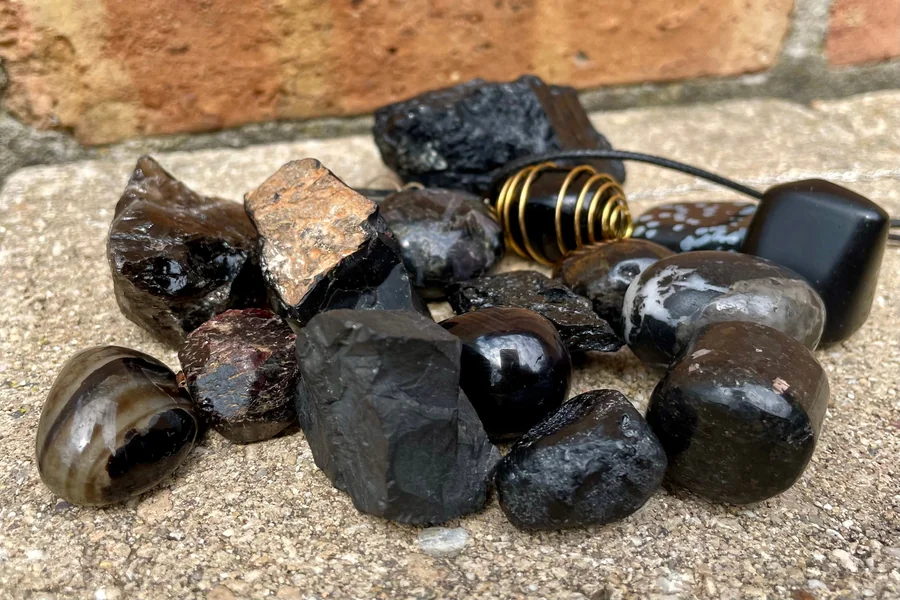
White Rock With Black Spots is the term that may be used by various individuals when they discover something out of the ordinary in a hiking tour, in a visit to a beach, or outdoor adventure. These rocks are immediately noticeable due to the great contrast at first sight. A very light or white ground is used with dark speckles and they form a shape that instantly seeks attention. Although the appearance is perhaps uncommon, there are a number of natural rock types that can acquire this unusual appearance.
These spotted arrangements tend to occur when darker minerals are incorporated to a lighter rock in the process of geology. Thousands or even millions of years of minerals crystallize, settle or grow in the rock in identifiable spots or inclusions. The spots are in some instances of the nature of tiny dots and in other instances they are either in form of irregular patches or branching forms.
To determine the rock more precisely, it is possible to understand what produces these patterns. Certain rocks of this appearance are an igneous rocks created by solidifying magma, and others are a sedimentary or metamorphic rocks which are formed because of heat, pressure, or mineral replacement.
This guide will focus on some of the types of rocks that usually look as a white rock with black spots and how to identify them.
Granite: A Common Spotted Rock
Granite is a type of rock which is most often met and which shows a dark spotty background on a white background. It is a rock that is igneous and was formed deep in the ground as the magma that was molten cooled slowly beneath the surface of the earth.
Since cooling takes time, the formation of large mineral crystals in the rock takes place. Granite normally includes a blend of quartz, feldspar and darker rocks like biotite or hornblende.
The white or light coloured parts are usually products of feldspar as well as quartz minerals. The black spots tend to be crystals of biotite or amphiboles scattered on the rock.
The crystals forming granite are visible due to the granite texture. This is one of the reasons why granite is a common building material and countertops.
Naturally granite formations are found in mountain ranges, cliffs and huge rock outcrops that have been formed by the cooling of ancient magma bodies millions of years ago.
Diorite: The Classic Salt and Pepper Rock
Another rock that is mostly referred to as igneous rocks is the Diorite which is normally known to appear like a white rock with black spots. Due to its unique color contrast it is at times referred to as the salt and pepper rock.
The diorite is an outgrowth of slow cooling magma that is beneath the earth surface. It is composed of light minerals such as plagioclase feldspar and dark minerals such as hornblende and biotite.
Diorite material normally contains low amounts of quartz and high amounts of dark mineral unlike granite. These form an equal pattern of black and white crystals scattered through the stone.
Diorite has crystals that are generally perceivable with the naked eye and this makes the rock have the texture of coarseness.
Due to its resistance to decay, diorite has been utilized in the past as a building material and in ancient sculpture. It even found application in carving statues and monuments by some of the ancient civilizations.
Diorite is one of the simplest rocks to recognize in the field owing to the salt and pepper look.
Dalmatian Jasper: A Decorative Spotted Stone
Dalmatian jasper is a special kind of stone that is famous due to its white background with black spots. The design can be likened to the coat of a Dalmatian dog that is how the stone got its name.
Although this is a modern jasper, its name is Dalmatian jasper and is not actually a jasper. It contains feldspar and quartz minerals and usually contains black inclusions of tourmaline or other dark mineral.
This rock is created as a result of mineral laden fluids that are solidified in the rocks and the darker minerals are entraped in the lighter material.
The spots tend to be either round or irregular in shape and are sharply contrasted with the pale background.
The playful design and the smooth polished look of Dalmatian jasper make it widely used in jewelry and in decorative objects.
The collectors frequently enjoy the stone as every item may have a different arrangement of spots.
Snowflake Obsidian: Black Spots on Pale Background
Another rock is the snowflake obsidian which is also said to be a white rock with black spots; however the colour pattern is just the reverse of other rocks.
This volcanic glass is usually black with snowflake shapes of white or gray color dispersed on the surface. These snowflakes are crystals of a mineral known as cristobalite which grow in the glassy structure as the structure cools down.
The background is darker but the spotted pattern generates a visual effect of black spots on a lighter stone.
Snowflake obsidian is formed when the lava becomes cool quickly in the case of volcanic eruption. The rapid cooling that occurs does not allow the formation of the crystals which leads to volcanic glass.
Gradually, the tiny crystals are formed within the glass and form the snowflake patterns.
This stone is used in jewelry and carvings due to its highly contrasting nature.
How Mineral Inclusions Create Black Spots
In most of the rocks, the dark spots are as a result of mineral inclusions. These inclusions are minerals that are enclosed within another mineral during the formation.
The spots develop in igneous rocks like granite or diorite as the dark minerals are crystallized together with the light minerals as the magma cools down.
The spots can be observed in sedimentary or metamorphic rocks whereby minerals can enter the rock using ground water or chemical reactions.
Dark minerals that are common and cause these spots are biotite, hornblende, tourmaline and magnetite.
The dimension and pattern of the spots is determined by the manner in which the minerals are crystallized or settled in the rock.
The patterns may also be evenly distributed in some instances and in others they are in a cluster or a branching form.
The knowledge of these inclusions assists the geologists in determining the kind of rock and the conditions under which it was formed.
Where These Spotted Rocks Are Found
In most natural settings, one can find rocks that have black spots. Granite and diorite are the two common materials that are usually found in mountainous areas where the ancient magma existed and solidified beneath the surface of the earth.
Dalmatian jasper is common in some of the mineral rich regions that involve volcanic and sedimentary processes, resulting in formation of unique stones.
The snowflake obsidian is usually found in volcanic regions where the lava had cooled down.
These rocks could also be found in the riverbeds or beaches where the water has eroded and polished the rocks.
Sometimes, spotted rocks are discovered by collectors during the hiking process, rockhounding, or geological sites.
The patterns are unique making them attractive to the collector who likes unusual patterns of minerals.
Final Thought
White Rock With Black Spots might appear to be easy to understand but can be applied to some of the most interesting types of rocks which are still created in various geological processes. Granite and diorite are igneous rocks that form speckles as the minerals cool down.
Similar spotted patterns are also exhibited by decorative stones such as Dalmatian jasper because of the mineral inclusions caught in the act of their formation. Stunning spotted designs can be made even of volcanic glass like snowflake obsidian.
These patterns emphasize how amazingly diverse natural processes are that determine rocks under the surface of the Earth. Color, texture and mineral composition are observed and it is easier to determine which type of rock you might have found.
These spotted stones are not only beautiful to collectors and nature lovers, but also they provide us with an insight into geological history of our earth.
FAQs
What causes a white rock with black spots?
The spots are usually dark minerals such as biotite or hornblende that formed within a lighter rock during crystallization.
Is granite a white rock with black spots?
Yes. Granite often appears white or light gray with dark speckles created by minerals like biotite.
What is Dalmatian jasper?
Dalmatian jasper is a decorative stone known for its white background and black spots that resemble a Dalmatian dog’s coat.
Are spotted rocks rare?
No. Many rocks display spotted patterns because mineral inclusions commonly form during geological processes.
Where can you find rocks with black spots?
They are commonly found in mountainous regions, volcanic areas, riverbeds, and places where igneous rocks are present.