
Largest Agate Ever Found – Size Location and History
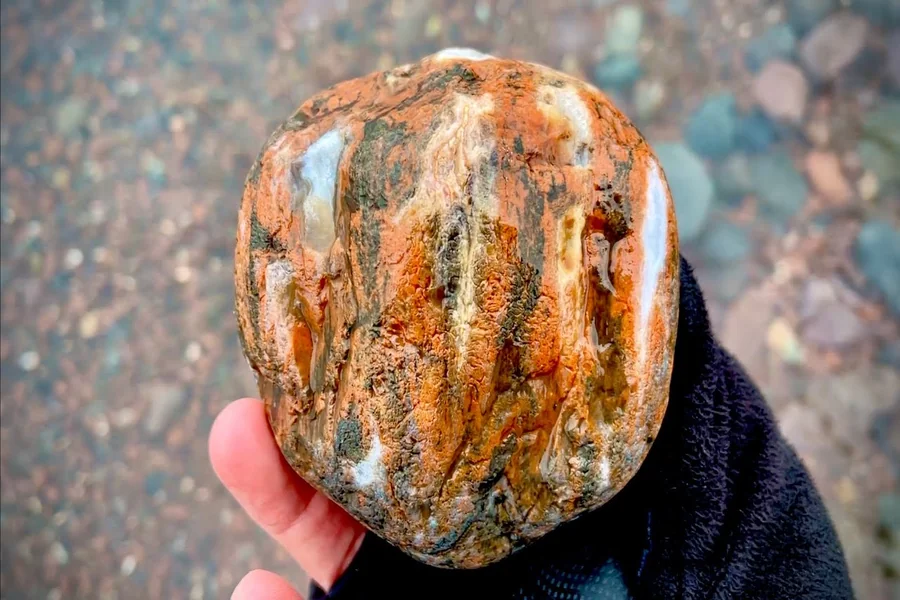
One of the most popular natural stones in the world is the agates. They have colorful bands, smooth texture and a very interesting geological history and hence make them popular with collectors and mineral enthusiasts. The nature at times creates agates that are so big that they draw the attention of the world. When one hears of the Largest Agate Ever Found they tend to think of a massive gem found inside the volcanic rock waiting to be discovered.
The agates typically develop as small nodules inside the volcanic rocks, although in the appropriate circumstances it may develop to be very large. These are rare giant specimens that can offer a lot of information about geological processes and even become a treasure in museums and even in personal collections. The Largest Agate Ever Found story is not only about the beauty of the natural minerals but also about incredible geological forces which mold the Earth during millions of years.
Learning the origin of these large stones and their location assists the collector and scientists to be sure of the conditions which are exceptional to allow the formation of such amazing mineral structures.
What Is an Agate and How It Forms
To get to know about the Largest Agate Ever Found, it is better to know what agate is. Agate is a type of chalcedony and is a microcrystalline structure of quartz. This implies that the stone consists of very small quartz crystals arrangements.
Agate is normally formed in the cavities of the volcanic rock. Gas bubbles are also occasionally trapped in the rock when lava cools down. These recesses provide excellent habitats of minerals in future.
These cavities allow silica rich water to flow over a long time. When the water gradually evaporates or cools down, the thin layers of silica are crystallized on the inner walls of the cavity. All layers are formed progressively and they could have varying impurities in terms of minerals.
It is these impurities that form the colorful bands that render agates well known. Iron minerals can give red or orange color whereas other elements form white, gray or blue layers.
This can take thousands or millions of years before the cavity is filled with solid layers of minerals. The agate can be discovered by the collectors, ultimately through erosion revealing the agate.
The Largest Agate Ever Found in History
One of the largest giant agates in the collection of amateurs is a huge one found in Brazil. Brazil is also famous in the production of large agates due to its ancient volcanic formations which have large deposits of minerals.
The largest agate on record weighed some tons and was several feet in diameter. The giant specimen was, instead of being a little rounded stone, as many a boulder in a riverbed is, but it was nearer to the boulder than to a stone.
Big agates such as these can be found in the huge volcanic holes called geodes or mineral nodules. Where they are sufficiently large, the agate layers might become very large with time.
These giant agates are in most instances cut into sections that can be studied and exhibited. The cross sections when polished show fantastic patterns of colored bands which have been developed in millions of years.
These giant specimens are very scarce, and are frequently the show-pieces of mineral collections or scientific collections.
Where Large Agates Are Commonly Found
Even though the Largest Agate Ever Found was publicized due to its size, other large agate have been discovered elsewhere in the world.
Brazil is considered to be one of the main importers of big agates. The chalcedony and quartz minerals are found in large amounts in the volcanic rock formations in southern Brazil. Such geological conditions enable agates to develop to be a lot larger than those in several other parts.
Uruguay is another nation that is known to have large agate specimens. Giant size agate geodes have been found here.
Lake Superior agates are famous among the collectors in North America. These tend to be smaller than the huge Brazilian examples, but even some of them can be impressive.
Other areas of agates include Mexico, India, Madagascar and Europe. But the biggest ones are usually found where there has been an ancient volcanic activity and a large system of mineral rich ground waters.
Why Giant Agates Are Rare
Agate is a fairly ordinary type of stone, yet it is very rare to find exceptionally large specimen of agate. A combination of several geological conditions is very specific in order to form a giant agate.
One, there must be a huge hole in the rock of the volcanic rock. The mineral layers cannot expand to a certain size in the absence of adequate space.
Second, the fluid containing silica should remain constantly flowing in the cavity at an extremely long period of time. In case the supply of the minerals is cut off too soon the agate will be small.
Third, the rock around should be stable enough to allow the layers to form. The growth may be disrupted by geological disturbances.
Millions of years are still needed in the process even when these conditions exist. Due to this period of time the formation of a giant agate is a rare natural phenomenon.
This is one of the facts that make the Largest Agate Ever Found so popular among the collectors and scientists.
How Giant Agates Are Used and Displayed
Large agates are usually valuable scientific and ornamental specimens found when they are found. They are beautiful and huge making them perfect in museums.
In numerous museums there are polished sections of large agates in which the visitor may examine the colorful internal banding. These cross sections usually display very complex forms and patterns that resemble natural art.
A few of the larger agates are cut into ornamental slabs to be used on table tops or architectural ornamentation. Agate is a hard and aesthetically pleasing material, and therefore has found applications in decorative stonework over a long period of time.
Smaller pieces of giant agates are also appreciated by the collectors. These pieces when cut and polished can be employed in jewelry, carvings or ornamental objects.
But the largest specimens are normally left on display as natural minerals instead of being cut to smaller sizes.
The Scientific Value of Giant Agates
Agate giant other than being beautiful is scientifically valuable. Geologists use these rocks to study the activities of how mineral deposits are formed in volcanic rock.
The patterns of the banding within agates can tell us about the conditions surrounding the formation of the agates. The different layers are the various stages of growth of the minerals.
Scientists can study the changes in ground water chemistry and temperature and mineral composition with time by studying these layers.
Large agates also give proof of the volcanic environment in the past and assist the researchers to rebuild the geological history.
It is due to these reasons that giant agates are not only beautiful stones, but also significant natural records of the geological activity on Earth.
Final Thought
The Largest Agate Ever Found tells about the immense force of the work of geological processes that goes so slowly, gradually working over millions of years. What starts as mere hole in volcanic rock, can ultimately grow to be a colossal gem that is coated with coloured mineral bands.
These mega agates serve to remind us that in most cases nature is capable of creating amazing works with patience and time. Although the majority of agate are about the size of the palm of a hand, there are some huge specimens which are so large that they can be the focal point of both the collector and scientist.
Giant agates in museums, among those studied by geologists or brought into admiration by their collectors, are some of the most interesting mineral formations on earth. Their attractiveness and scarcity mean they will still arouse interest into the natural world in the generations to come.
FAQs
What is the Largest Agate Ever Found?
The largest agate ever found is a massive specimen discovered in Brazil that weighed several tons and measured several feet across.
Where are large agates usually found?
Large agates are most commonly found in regions with ancient volcanic rocks such as Brazil Uruguay and parts of Mexico.
How do agates grow so large?
Agates grow large when silica rich water continues depositing mineral layers inside large volcanic cavities over millions of years.
Are giant agates valuable?
Yes giant agates can be very valuable because of their rarity size and beautiful internal banding patterns.
Can large agates be used for jewelry?
Large agates are often cut into smaller pieces which may then be polished and used for jewelry or decorative objects.
Why do agates have colorful bands?
The bands form when different mineral impurities are deposited in layers as silica crystallizes inside volcanic cavities over time.