
Where to Find Arrowheads in Arizona – Best Places Guide
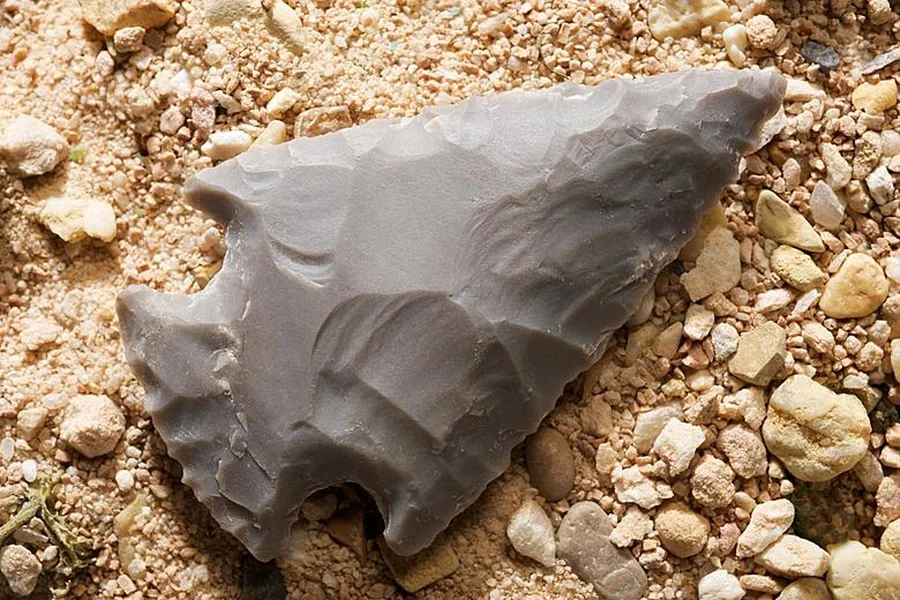
The question of the whereabouts of the arrowheads in Arizona is a topic that arouses the interest of every history lover, hiker, and artifact collector. The huge deserts, the old riverbeds and ancient Native American settlements of Arizona make it one of the most intriguing states in the United States to find old tools and artifacts. The arrowheads are tiny projectile points on the stone which were previously utilized by indigenous people to hunt and survive, and sometimes it is possible to find them scattered all over some landscapes.
At least, arrowheads cannot be just discovered by going to the desert and picking them off. Arizona has numerous areas which are guarded archaeological sites and gathering artifacts is against the law. Others can be viewed but not taken away. To be able to do responsible exploration, one should understand in which areas it is lawful to search and which places can be identified as possible ones.
The history of these artifacts dates back to thousands of years. Older cultures like the Hohokam, Ancestral Pueblos and other native inhabitants inhabited the land and also manufactured stone tools using obsidian, chert and jasper. These tools may be left untouched in the desert where they may be eroded over time to expose them.
This guide will see us examine possible places where arrowheads were historically located, how to be a responsible inference seeker, and what to be aware of before attempting to find ancient objects in Arizona.
The History of Arrowheads in Arizona
The history of Arizona is rich in terms of archaeological past. Even before the emergence of the modern cities, indigenous cultures were present in the area and built sophisticated societies. These societies were very dependent on the stone tools in hunting, cooking, and craft making.
The arrowheads are in fact a projectile point. Others were applied on arrows and others were fitted on spears or darts shot using special weapons. The design of individual projectile points used to be different, many times depending on the time of period, and the culture in which the point was made.
Arrows were made with serious consideration of the material used. Obsidian, chert and flint were good examples of rocks as they could be flintknifed to a sharp cutting edge.
Gradually most of such tools were misplaced, destroyed or dumped, around the campsites, hunting grounds or pathways. These artifacts are slowly revealed through natural erosion, and that is why some of them can be observed on the surface even in some settings nowadays.
The study of arrowheads can educate the archaeologist on the trade routes and migration patterns as well as hunting techniques adopted by the early people in the Southwest.
Where to Find Arrowheads in Arizona’s Natural Landscapes
Several individuals who seek to know about the location of Arrowheads in Arizona visit locations that were traditionally good to have ancient settlements. In the early societies, the communities would be close to water bodies as it was a sure way of survival.
Other likely locations of artifacts include dry riverbeds and washes. Seasonal floods may transport soil and expose objects buried in it, such as projectile points and stone tools. New surfaces can be observed after heavy rains.
Another setting where the arrowheads occasionally occur is in open desert plains. Areas where vegetation artifacts are not so abundant might have them lying on the floor for extended durations.
Rocky hillsides and places adjacent to the ancient volcanic formations may also prove to be good due to their potential in having the raw material used to make stone tools. It was common to find tools made by ancient people close to the location where they extracted the stone.
Nevertheless, it is of paramount importance to keep in mind that a lot of those regions are located in the areas of the protected land, which can be either a national park or a tribal territory or an archeological reserve. Any removal of artifacts in such places is also unlawful and may attract severe punishments.
To the individuals who want to appreciate the tourism of arrowheads, going to museums and documented archaeological sites can be an excellent experience of viewing real objects without violating laws on preservation.
Legal Considerations Before Searching
Besides having the obligation to know the legal protection of archaeological resources, everyone who wants to search an object must have such knowledge first. Arizona has numerous arrowheads and other artifacts that are covered by both the state and federal laws.
Federal lands including national parks, monuments and forests are typically illegal to collect or remove artifacts. They are regarded as cultural artifacts of the indigenous people and have been preserved to be used in research and conservation.
There is also a strict guard on tribal lands. Access to most of these locations is restricted by the permission of the governing tribe and removal of artifacts is not allowed.
Even on private land, it is possible to collect with the consent of the landowner, but in this case, one should also use ethical considerations. In case an artifact seems to belong to a bigger archeological site then it should not be touched at all and should be reported to the authorities.
These are laws created to safeguard historical evidence. Loss of artifacts that are not documented may ruin precious information on how people in the ancient times lived.
These rules have to be understood and honored to become a good observer of artifacts.
How to Recognize Real Arrowheads
The desert is not filled with all sharp stones which are arrowheads. To avoid misunderstanding, it is possible to learn how to identify projectiles points that are genuine.
The genuine arrowheads are usually characterized by marks of deliberate shaping. The flintknapping technique leaves the scars of the flakes at the edges of the pieces of stone, which were carefully removed in order to make a sharp point.
A lot of the arrowheads have a bottom that was used to fix them to a shaft. This base can contain notches or a stem where about the point bindings were applied to a wooden arrow or spear.
Another significant indicator is symmetry. Although the handmade tools are not exactly symmetrical, the majority of the arrowheads have balanced forms as they were well-made to be used as aerodynamic tools.
Clues can also be given by the material. Obsidian, chert, flint, and jasper were all common stones that were used due to their ability to fracture in predictable patterns which enabled them to form sharp edges.
Antique objects can also have weathering and patina. With time exposure to the environmental conditions may lead to a smooth or even slightly dull surface.
These characteristics contribute to drawing a line between the real tools and the naturally broken stones.
Tips for Ethical Artifact Hunting
To aid people who may want to search the artifacts in a responsible manner, there are various ethical principles that can assist in safeguarding the historical resources.
The first one is that respecting all laws and regulations at the local level should be observed. In case of a ban on the gathering in a particular place, the objects are to be left at the point of discovery.
Even without the removal of artifacts, documentation can be useful. Taking pictures and documenting the place of an item could assist the archeologists in gaining insight into the layout of ancient places.
Never disturb the soil layers. The unprofessional excavation may both fragile artifacts and destroy valuable archaeological information.
The indigenous cultural heritage should also be respected. Native Americans have numerous artifacts, which contain historical and spiritual value.
Through the respect and curiosity they exhibit in their observation of the artifacts instead of treating them like possessions, the enthusiasts can contribute to the history of the ancient cultures being passed on to the next generations.
Why Arrowhead Hunting Remains Popular
Although the collection of arrowheads is legally restricted in most of the places, there is still a great interest in the subject of arrowheads among the historians and outdoor enthusiasts. One of the attractions is also the association with the past. The projections of historical continuity can be generated by holding a stone tool that can be thousands of years old.
The second cause is that of the adventure of discovery. The discovery of even an artifact on the ground can seem like the discovery of a lost fragment of human history.
The sceneries in Arizona are very exciting too. These expansive desert lands, mountains, and volcanic formations make the environment very close to the original inhabitants of the region.
Yet, to make sure that these artifacts are preserved, it is necessary to be responsible in their observation. Archaeological findings are very useful in understanding the type of culture that existed in the American Southwest.
Final Thought
The criteria of Where to Find Arrowheads in Arizona are in its nature and curiosity about the past and the admiration of ancient craftsmanship. The deserts and riverbeds of Arizona have saved the innumerable remnants of the indigenous cultures that inhabited this land over thousand years.
Although the arrowheads sometimes occur naturally in the natural landscapes because of erosion and changes in the environments, in many areas that they are found, the areas are guarded by stringent laws. These laws assist in preserving cultural heritage and consequent to make archaeological findings open to research and education.
If any person is interested in such amazing artifacts, the only way to learn more about their history, as well as respect preservation policies. Arrows, whether on museum display, in archaeological excavations, or on record, provide an extraordinary insight into the lifeways of the people who once inhabited the Arizona desert.
FAQs
Where can arrowheads be found in Arizona?
Arrowheads are sometimes found in desert plains, dry riverbeds, and areas near ancient settlements, but many of these locations are protected and collecting may be illegal.
Is it legal to collect arrowheads in Arizona?
Collecting artifacts is illegal on federal lands, state parks, and tribal lands. Permission is required on private property and artifacts should not be removed from protected sites.
What stones were used to make arrowheads in Arizona?
Common materials include obsidian, chert, flint, and jasper because these stones can be shaped into sharp edges through flintknapping.
How old are arrowheads found in Arizona?
Some arrowheads can be hundreds to several thousand years old depending on the culture and time period in which they were made.
How can you identify a real arrowhead?
Authentic arrowheads usually show flake marks from shaping, symmetrical designs, and a base or notches used to attach the point to a shaft.