
How to Identify Jasper – Colors Patterns and Key Signs
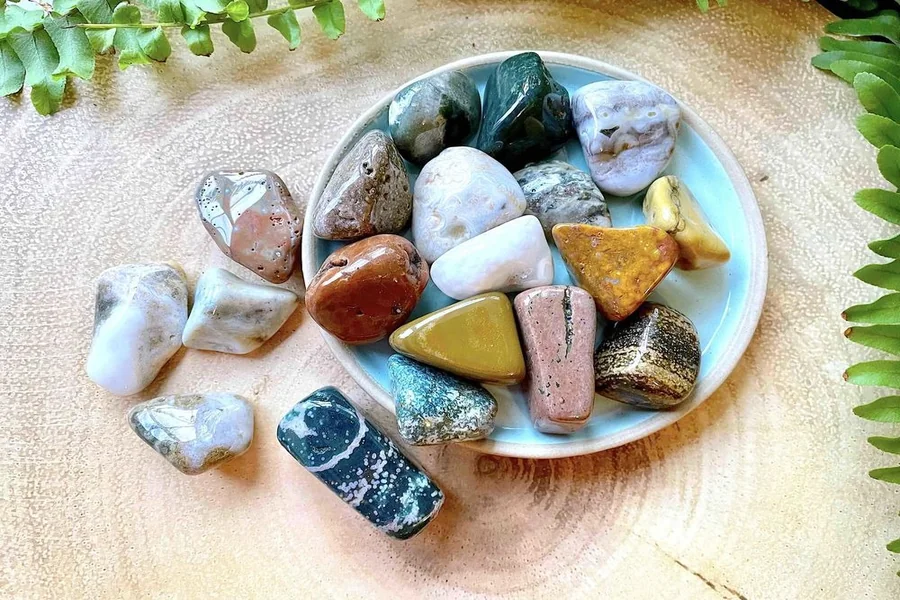
One of the most well known rock minerals and gemstones is jasper. Its vibrant colors and detailed designs have ensured that it has remained favorite to collectors jewelers and rock lovers over centuries. But how many amateurs would not feel the difficulty of answering the question How to find Jasper when they come upon a pretty stone in nature or in a mineral collection?
In as much as jasper might appear like any other stone at first sight it has a number of distinct features that can be used to draw a difference between the stone and other minerals. There are some attributes of jasper that are usually used by geologists and collectors to recognize this mineral, and such attributes include color patterns, hardness surface texture, and mineral composition.
Jasper is a member of the quartz family and the form of chalcedony. Its peculiarity consists in the fact that it contains mineral impurities which make jasper famous by a great range of colors and patterns. Through the understanding of how to identify these characteristics anyone can learn to identify this interesting stone better.
What Is Jasper and How It Forms
Jasper is a chalcedony that is opaque and in its turn is a microcrystalline quartz. This implies that the crystals of jasper are very fine and can be viewed only under the naked eye. Due to this structure jasper usually has a smooth solid look instead of crystal structure that can be observed.
The rock develops the stone by filling the cracks or holes of the rocks with silica rich fluids. These liquids solidify with time forming thick mineral deposits. In the process other minerals like iron manganese or clay get trapped within the forming stone.
It is these impurities that give jasper its very numerous colors that are red yellow brown and green and occasionally blue. The minerals also form rare patterns in form of stripes swirls spots or landscape like images.
Since this formation process takes place in numerous geological settings jasper is located in both volcanic rock and also in the sedimentary rocks and even in the ancient river deposits.
Common Colors and Patterns Found in Jasper
The colors and patterns of jasper are one of the simplest methods to identify jasper. Most of the gemstones are transparent or translucent, but jasper is nearly always opaque.
One of the most common ones is the red jasper. The deep red color is normally due to iron oxide in the stone. This diversity has been applied in jewelry and decorations over thousands of years.
Another type is yellow jasper. It can be seen in solid colors with a great deal of earth tones; mustard yellow down to a golden brown.
There are jaspers with very elaborate designs like bands or swirling designs. All these patterns are created when mineral rich fluids pass through layers of rocks in the formation process.
The other types have spots or orb shaped features that form visually appealing surfaces. Due to these trends jasper is often applied in the cabochons beads and carved ornaments.
Every specimen of jasper is rare and this is one of the reasons why the collectors like the process of searching new ones.
Physical Characteristics That Help Identify Jasper
A number of physical properties are particularly useful when studying how to determine jasper. Hardness is one of the most crucial features.
The hardness scale of Jasper is approximately 6.5-7 that implies that it is able to scratch glass. This is hardened by the fact that it is composed of quartz, which is one of the things that make it different in comparison with the other softer stones.
The other aspect that should be considered is texture. Jasper tends to be very smooth and solid having a dense structure. As it gets polished it forms a glass like finish.
There is also conchoidal fracture in which the stone fractures. This implies that the surface that has been broken is in the form of a curve or shell contrary to a flat surface.
Jasper does not often develop visible crystal faces unlike many other crystals. Rather it tends to present itself in the form of nodules or lumps which are round and irregular.
All this combined makes jasper fairly easy to identify once you are aware of what you are supposed to identify.
Types of Jasper Often Found by Collectors
Jasper is a material that exists in numerous forms and each form has distinct appearance. A popular one is picture jasper that also has patterns that appear to be landscapes or natural scenery.
Another popular type is ocean jasper. It tends to appear as circular or orb like and is mostly located close to the volcanic deposits of the coastal areas.
Dalmatian jasper is also identified readily by its light background with dark spots that look like the pattern of the coat of a Dalmatian dog.
Jasper Brecciated jasper is created by pieces of jasper that break off and are then cemented together with other minerals including quartz, or calcite. This forms a bold patchwork effect.
There are also other types such as leopard skin jasper and rainforest jasper which are named after the designs that are formed on their surfaces.
These various shapes reveal the variation that can be found in jasper even though it is a family of minerals.
Simple Tests to Confirm Jasper Identification
To be even more sure that they are identified there are some simple tests which can be given.
One of the most widespread methods is the hardness test. Since jasper is relatively hard then it must be able to scratch the glass but not easy to be scratched by steel.
The other approach involves the use of a magnification of the stone. The microcrystalline structure is mostly homogeneous without perceiving the large crystals.
It also helps to check the stone on its being opaque. Jasper is typically opaque implying that light can not go through it.
Clues may also be given by weight and density. Jasper is dense with quartz that makes it heavier than most of the other stones of the same size.
Although these are strong evidence that may prove it is not necessary to subject the mineral to further testing by a professional to be certain.
Final Thought
Learning How to Identify Jasper can be a pleasant and rewarding experience to any person who has an interest in rocks and minerals. The uniqueness of Jasper is due to its amazing range of color schemes and natural beauty.
Even though it is a member of the quartz family, its opaque structure and unique patterns enable one to identify it among most other stones with ease. Through the study of features like color hardness texture and fracture patterns collectors can frequently determine with certainty a jasper.
In addition to identification jasper is also of a cultural and artistic value. Jasper has been cut and polished as an ornamental object and jewelry by people over centuries.
All the stones have their own geological tale of minerals heat and time that are deep in the earth. By practice and observation any one can be made to know jasper and to admire the natural artistry that lurks in this wonderful rock.
FAQs
What is jasper?
Jasper is an opaque variety of chalcedony which is a microcrystalline form of quartz.
How can you tell if a rock is jasper?
Jasper is usually opaque has a hardness of about 6.5 to 7 and often displays colorful patterns or bands.
Is jasper a valuable gemstone?
Jasper is generally affordable but certain rare patterns and high quality specimens can be valuable to collectors.
Where is jasper commonly found?
Jasper can be found in volcanic rocks sedimentary formations and ancient river deposits around the world.
Does jasper have crystals inside it?
Yes jasper contains quartz crystals but they are extremely small and cannot be seen without special equipment.