
Snowflake Jasper vs Snowflake Obsidian: Key Differences Guide
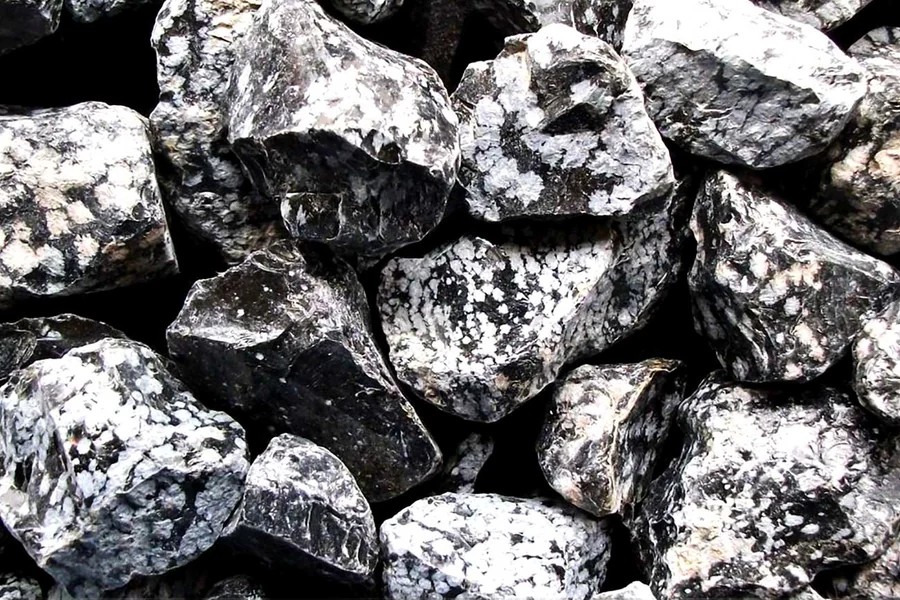
The Snowflake Jasper and Snowflake Obsidian are two gems that are frequently used in discussions between gemstone lovers, crystal collectors and jewelry lovers. All these four stones seem to be similar at the first sight since both of them have dark surfaces with noteworthy white or gray snowflake-like patterns. But as a matter of fact they are quite different in composition, origin, energy associates as well as their daily applications.
People tend to believe that they are one and the same thing by another name. As a matter of fact, Snowflake Jasper and Snowflake Obsidian are as different as the processes that led to their formation. One is of a sort of jasper, a kind of chalcedony quartz. The other is a sort of volcanic glass which is formed out of lava that was cooled very fast.
Knowing the distinction may assist you in making better decisions when purchasing jewelry, gathering crystals or utilizing stones in a decorative or spiritual manner. In this guide we shall closely examine their origins, visual distinctions, meanings and practical applications in order to distinguish them easily.
What Is Snowflake Jasper?
Snowflake Jasper is a type of jasper which forms light colored spots in form of falling snow scattered through a dark background. Jasper is a type of mineral related to the family of chalcedony and it is regarded as one of the microcrystalline quartz. It is developed gradually in the sedimentary or volcanic conditions in which silica-rich fluids are hardened during a period.
These patterns of the snowflakes are brought about by mineral inclusions, which are developed in the formation of the stone. The inclusions form soft white or gray forms which stand out in sharp contrast to the background which is darker. The patterns are mostly uneven and may be in the form of tiny speckles up to bigger rounded forms.
Cut and shaped Snowflake Jasper is usually opaque and is finished matte or slightly polished. It has a smoother and a little softer texture than the volcanic rocks such as obsidian.
According to crystal traditions Snowflake Jasper may be considered to have grounding, emotional tranquility, and peace. Most people feel that it teaches patience and inner peace. Its soft look and natural sound make it be commonly employed in bracelets, beads, decorative carvings and in meditation stones.
Durability is also another factor that has made it popular. Jasper is approximated at 6.5 to 7, and this makes it appropriate in jewelry that is worn on a regular basis.
What Is Snowflake Obsidian?
Snowflake Obsidian it is a volcanic glass that is produced naturally and it is formed when the lava cools very rapidly. This is due to the fact that since it cools off so rapidly the lava has no time to solidify into a regular minerals structure. It is instead solidified in a glass like substance, which is referred to as obsidian.
The appearances of the white snowflake patterns at this stone are really the crystals of cristobalite which develop in the black volcanic glass and they appear during the cooling of this object. Such groups of crystals form the common snowflake effect that renders the rock so eye-catching.
Snowflake Obsidian is normally jet black which is embellished with white or gray designs resembling snowflakes or burst of frost. It is glassy and can have a highly polished surface as well as being reflective.
In comparison to jasper, obsidian is a little softer and brittle. It is about 5 to 5.5 on Mohs scale. This implies that it can scratch or break easily when it is roughly handled.
Snowflake Obsidian attracts the attention of many people due to its dramatic looks. Among the crystal traditions it is frequently linked with protection, clarity and emotional healing. Others think it can bring out the truths hidden and promotes the personal development by making the subconscious patterns visible.
Due to its very sharp contrast and shiny surface, Snowflake Obsidian is often utilized in jewelry and polished balls, palm stones and decorative carvings.
Snowflake Jasper vs Snowflake Obsidian: Visual Differences
These two stones appear almost the same at a first sight. They both have dark backgrounds and white speckled designs resembling snow. But there are a few visual hints that can be used to distinguish between them.
The former is the surface finish. Even polished Snowflake Jasper is usually softer and more matte. Snowflake Obsidian can be made to look more reflective and glossy due to its glassiness.
Another hint is the pattern shape. Snowflake Jasper tends to carry more irregular or cloud formations which fades into the background. The crystallization of cristobalite also tends to make the patterns of Snowflake Obsidian more pronounced and star-shaped.
There is also a slight difference in the color tone. Jasper can be of dark gray, brownish black color or charcoal. Obsidian is usually black with high contrast of the white flakes and the base.
Weight and feel may also give clues. Jasper tends to be a little thicker to touch and warmer than obsidian that may seem slicker and smoother.
The difference can be better perceived when you put both stones together. Jasper is more down-to-earth and grounded but obsidian appears sharper and more reflective.
Geological Formation and Mineral Composition
Formation of every stone is probably the greatest difference in the Snowflake Jasper vs Snowflake Obsidian comparison.
Snowflake Jasper is a sedimentary and hydrothermal mineral that is created by deposition of minerals, which comprises silica rich solutions, as minerals slowly build up over time. The outcome is a solid, microcrystalline structure of quartz. This gradual creation enables other mineral inclusions to form the spotted or patterned appearance with the stone.
Snowflake Obsidian is produced as a result of volcanic action. Lava, which is released and solidified very fast, does not crystallize, but forms volcanic glass. Gradually the small crystals of cristobalite are formed inside the glass and the snowflake shapes are formed.
This is the reason why the stones do not change in the same manner when cut or polished. Owing to its crystalline structure, jasper is easily carved and shaped without chipping. However, Obsidian breaks in acute edges since it acts like glass.
Even blades and arrowheads have been crafted historically using obsidian because its edges on fracture are so sharp.
Read More: Manifest Your Dream Life Through Calm Daily Intention
Uses in Jewelry, Decoration, and Healing Traditions
The two kinds of stones are commonly employed in ornaments and jewelry. The causes of people adopting them, however, may vary in accordance with the personal taste.
Snowflake Jasper is mostly utilized in bracelets, beads, pendants and sculpted figurines. Its neutral shades allow combining it with numerous types of jewelry without any problems. It can be used as the everyday accessories due to its toughness and a comparatively low level of scratch resistance.
Snowflake Obsidian is commonly used on statement pieces. The black background of the drama and bright white snowflakes patterns are of great contrast. This is particularly fashionable in necklaces, rings and polished gems stones in the form of balls.
In spiritual or crystal works every stone has varying symbolic meanings.
The stabilization, grounding, and emotional balance is usually associated with Snowflake Jasper. Individuals that meditate occasionally employ it as a soothing rock in the meditation or relaxation program.
Snowflake Obsidian is usually associated with protection and transformation. It is thought by many to be a way of letting go of negative thoughts and stimulating personal insight.
Although these meanings are not based on scientific knowledge, but on cultural and religious backgrounds, they are still a significant component of the ways that individuals relate to gemstones.
How to Choose Between Snowflake Jasper and Snowflake Obsidian
The selection between the two stones would highly depend on one personal preference, and the purpose of their use.
You can choose Snowflake Jasper in case you feel more at ease with a stone that has a softer surface, with more resemblance to the earthy look and greater durability. It is functional everyday jewelry, and is light-hearted in looks, which can be used with non-dressy clothes.
Snowflake Obsidian might be more attractive to you in case you are attracted to contrast finishes and glossiness. Its patterns and black tone are dramatic and provide an impressive visual effect that will be prominent in jewels.
Think of what you are going to make out of the stone. Jasper may be beneficial in terms of durability to ordinary bracelets or objects that are likely to be used on a regular basis. In ornaments or statement jewelry, one can use obsidian with its reflective surface as an addition.
In the end you have to choose the one that appeals to you aesthetically and emotionally.
Final Thought
The example of Snowflake Jasper vs Snowflake Obsidian is the comparison of two visually similar stones whose origins and properties are totally opposite to one another. The latter is formed in mineral rich environments in the form of a quartz compound whereas the former is formed when lava comes into contact with extreme heat.
Their distinction goes beyond geology to their looks, longevity and meaning. Snowflake Jasper is a warm and relaxing experience and Snowflake Obsidian is a confident and dramatic one.
It is these differences that enable the collector, jewellery lover and even crystal lovers to appreciate each stone as it is. You can opt to the maturity of jasper, its grounded elegance or the radicals of obsidian, which has its own charm and eternal attractiveness.
FAQs
What is the main difference between Snowflake Jasper and Snowflake Obsidian?
The main difference is their formation. Snowflake Jasper is a type of microcrystalline quartz while Snowflake Obsidian is volcanic glass formed from rapidly cooled lava.
How can you tell Snowflake Jasper and Snowflake Obsidian apart?
Snowflake Jasper usually has a matte earthy appearance with softer patterns while Snowflake Obsidian has a glossy surface with more defined snowflake shaped markings.
Is Snowflake Obsidian stronger than Snowflake Jasper?
No. Snowflake Jasper is generally harder and more durable while Snowflake Obsidian is more brittle because it behaves like glass.
Are both stones used for jewelry?
Yes. Both stones are widely used in jewelry including bracelets, necklaces, and rings because of their distinctive patterns and contrasting colors.
Do Snowflake Jasper and Snowflake Obsidian have spiritual meanings?
Many crystal traditions associate Snowflake Jasper with grounding and balance while Snowflake Obsidian is often linked with protection and emotional insight.